Connect with us

Business

NCC Orders Telco’s To Block SIM Cards Not Registered With National Identity Numbers Within Two Weeks

Beginning from December 30, 2020, The Nigerian Communications Commission (NCC) has ordered all telecommunication operators in the country to block all SIM cards that are not registered with the National Identity Numbers (NIN). 

The Minister of Communications and Digital Economy, Isa Ali Ibrahim (Pantami) on Monday, December 14, 2020, while making this announcement said this is due to the need for improvement of the achievements of last year’s SIM registration audit.

Also Read: The Nigerian Embassy In Germany Sacks Staff Who Asked For Sex For Visa Renewal

There are only 42 million people with a National Identification Number in the country which means over 150 million Nigerians are still without a NIN. There are over 200 million mobile subscriptions in Nigeria. With up to 100 million unique mobile subscribers, it can be inferred that only about 42% have a national identification number.

The two-week timeline given by the NCC to expect Nigerians to go all out post-COVID-19, during a festive season to update SIM card registrations with NIN looks impractical and insensitive. If the commission fails to review this policy,  it could end up blocking the SIM cards of 25% of the entire Nigerian populace.

2 Comments

2 Comments

  1. Pingback: FRSC Makes NIN Mandatory For Issuance Of Drivers Licence - Spotlightafricamedia

  2. Pingback: Inflation Rises To Highest Point In Three Years - Spotlightafricamedia

Leave a Reply

Your email address will not be published. Required fields are marked *

Business

NCC orders Telco’s To compensate subscribers for poor network service

The Nigerian Communications Commission (NCC) has instructed Mobile Network Operators (MNOs) to make things right for customers when the network quality in certain areas doesn’t meet the expected standards.

This directive was shared in a statement released on Sunday by Nnenna Ukoha, who leads the Public Affairs Department. The statement emphasized the Commission’s firm view that customers shouldn’t have to bear the entire brunt of service problems if operators aren’t meeting the required service delivery benchmarks.

Part of the statement said “Under this directive, erring operators will compensate affected users directly for breaches of Quality of Service (QoS) Key Performance Indicators (KPIs).
Mobile Network Operators (MNOs) shall be required to pay these compensations for instances of poor quality of service recorded within specified time frames.

The compensation will be provided in the form of airtime credits, calculated based on subscribers’ average spending patterns and their presence within Local Government Areas where service failures occur.”

Ukoha explained that this directive stems from the Commission’s overall approach to regulation, which prioritizes the consumer right at the heart of Nigeria’s telecommunications landscape. They emphasized that today’s telecommunications services are fundamental to economic activity, social connections, and gaining access to digital possibilities.

“When service quality is poor, the consequences affect productivity, commercial activities, and even public confidence in our communications system.

While regulatory fines have traditionally served as a deterrent against poor service delivery, the Commission is adopting a more consumer-focused approach that strengthens accountability within the industry,” the statement said.

The Commission has designed this measure to complement existing and ongoing efforts to strengthen service quality monitoring and enforce performance standards.

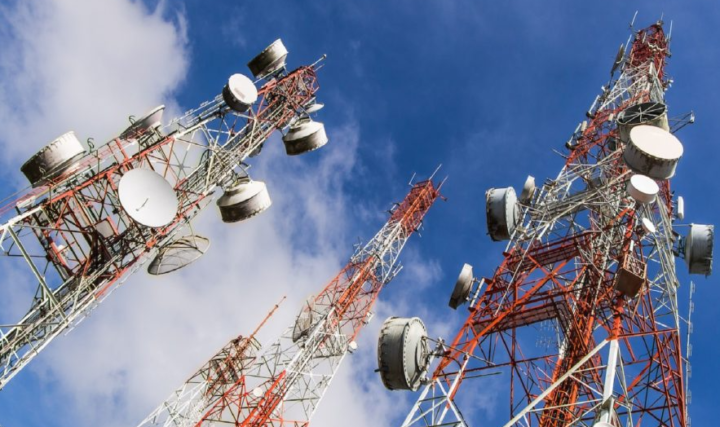
“Further to this directive by the Commission to MNOs on compensation to consumers, the Commission is also mandating Tower Companies that own the critical infrastructure for Quality of Service delivery, such as masts, to invest in infrastructure with measurable outcomes using sums that it has fined these companies, in addition to other financial fines the Commission will deem appropriate.

Continue Reading

Business

Top 5 Jobs That Will Survive The AI Boom

As artificial intelligence moves from a speculative tool to a core component of global infrastructure in 2026, the labor market is evolving rapidly. While routine cognitive tasks such as entry-level coding, basic data entry, and script-based customer service are being rapidly automated, roles that require high-stakes accountability and complex physical intervention remain resilient.

Here are the top five jobs uniquely positioned to survive, and even thrive, in the age of AI.

  1. Skilled Trade Specialists (Electricians & Plumbers)
    Robotics has made significant strides, but the “unstructured environment” problem remains a major hurdle. An electrician or plumber must navigate unique physical spaces, troubleshoot idiosyncratic legacy systems, and apply manual dexterity that a machine cannot cost-effectively replicate. These roles require real-time problem-solving in unpredictable, high-stakes settings.
  2. Healthcare Providers (Nurses & Specialized Therapists)
    While AI is revolutionizing diagnostics and imaging, it cannot replace the “human-in-the-loop” necessity of patient care. Nursing and physical therapy require a blend of acute physical movement, empathy, and ethical judgment. The aging global population ensures that the demand for high-touch, compassionate care will continue to outpace the capabilities of any digital interface.
  3. High-Stakes Decision Makers (CEOs & Pilots)
    The “AI-Resistant Careers Index” of 2026 highlights a crucial factor: accountability. In roles like airline pilots or chief executives, the cost of failure is catastrophic. Societies and stakeholders are currently unwilling to delegate ultimate responsibility to an algorithm. These jobs require decision-making under extreme pressure where human intuition and moral liability are mandatory.
  4. Mental Health Professionals
    AI chatbots can offer basic cognitive behavioral exercises, but they lack true empathy and the ability to navigate the nuances of human trauma and complex social dynamics. Psychologists and social workers provide a level of relationship-building and cultural competence that remains a “black box” for generative models, which only simulate understanding based on historical data.
  5. AI Ethics & Governance Analysts
    As AI becomes more integrated into daily life, the need for humans to “police” the machines is skyrocketing. These professionals audit AI systems for bias, ensure regulatory compliance, and handle the philosophical questions of how technology should be applied. They represent the bridge between technical capability and human values.

Continue Reading

Business

Fidelity Bank appoints new board chairperson

Fidelity Bank Plc has appointed Amaka Onwughalu as its new board chairperson following the completion of the tenure of its former chairperson, Mustafa Chike-Obi.

In a Friday disclosure to the NGX, signed by the company secretary, Ezinwa Unuigboje, the bank said Mr Chike-Obi, a non-executive director and chair of the board, stepped down from the board on 31 December 2025 after completing his tenure, in line with the bank’s policy.

The bank said that under Mr Chike-Obi’s leadership, Fidelity Bank recorded significant growth across key financial indices, with the board successfully executing the bank’s strategy and achieving major milestones aligned with its long-term vision.

It added that the board and management expressed appreciation to Mr Chike-Obi for his contributions to the growth and development of the bank during his time on the board.

As part of its board succession planning policy and to ensure a smooth transition, the board approved the appointment of Mrs Onwughalu, an existing non-executive director, as chairperson of the board with effect from 1 January.

The bank said the Central Bank of Nigeria (CBN) has been formally notified of the appointment.

Mrs Onwughalu joined the board of Fidelity Bank on 17 December 2020. Before she was appointed chairman, she served as chairperson of the board credit committee and the board committee on bank capitalisation.

She is also a member of the board finance and general-purpose committee, the board remuneration, nomination and governance committee, and the board risk management committee, which she previously chaired.

The board said it was confident that Mrs Onwughalu would lead the board in the continued successful execution of the bank’s strategy, adding that the succession arrangement reflects Fidelity Bank’s strong corporate governance standards.

Mrs Onwughalu has over 30 years of banking experience, including more than 10 years in executive management across several financial institutions.

Her experience spans commercial banking, retail banking, treasury management, banking operations, and corporate banking.

She previously served as group managing director of the legacy Mainstreet Bank Limited, where she led the seamless integration of the bank with Skye Bank Plc.

She later served as deputy managing director at Skye Bank Plc until her retirement in July 2016.

She is currently the chief executive officer of Blueshield Financial Services Limited.

Mrs Onwughalu holds a bachelor’s degree in economics from the University of Buckingham, a master’s degree in corporate governance from Leeds Metropolitan University in the United Kingdom, and an MBA from the University of Port Harcourt.

She has attended leadership, executive and business development programmes at several global institutions, including INSEAD in France, IMD Business School in Switzerland, Judge Business School at the University of Cambridge, Columbia Business School in the United States, Stanford Graduate School of Business, Harvard Kennedy School, and the Institute of Directors in Nigeria.

Continue Reading

Trending