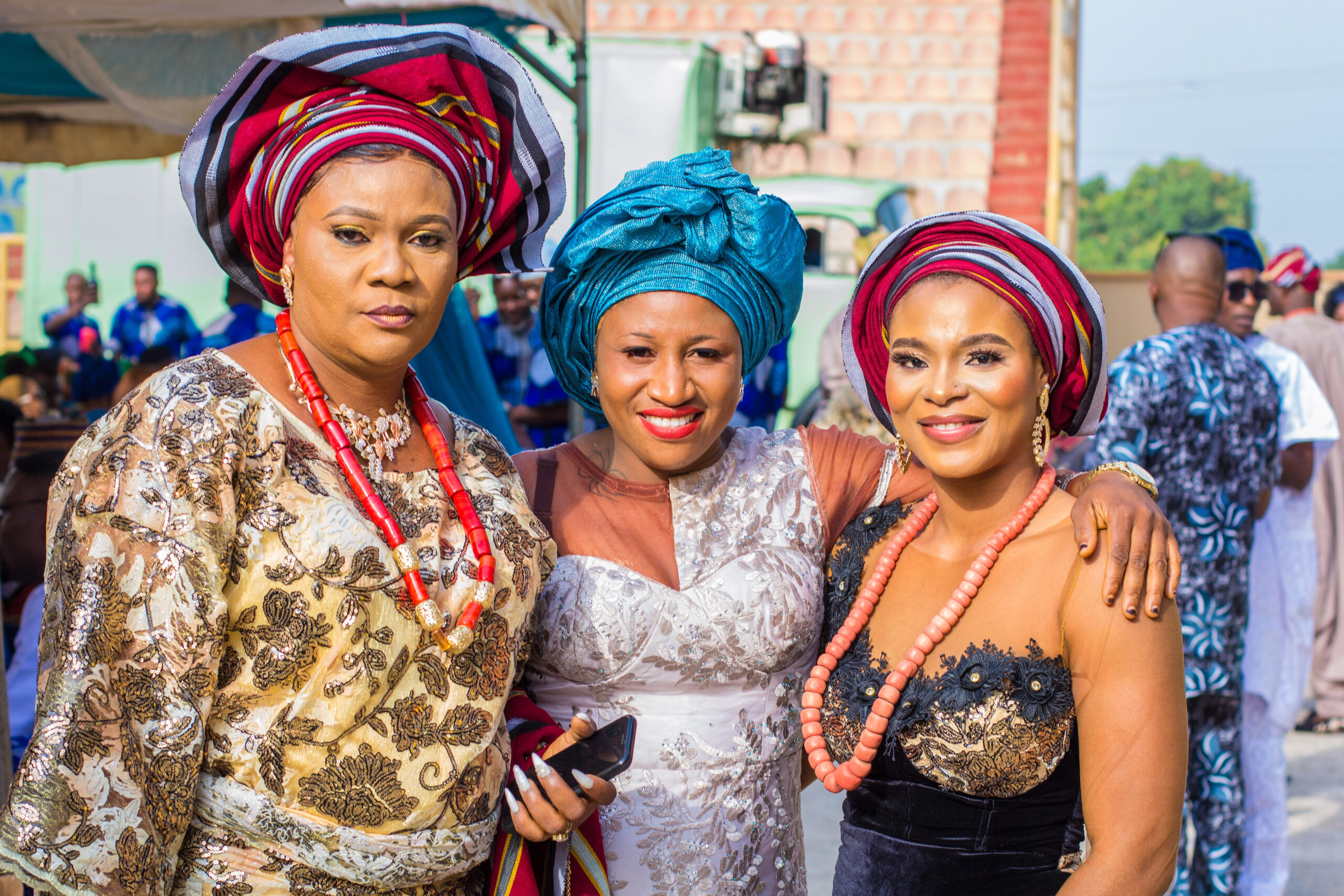
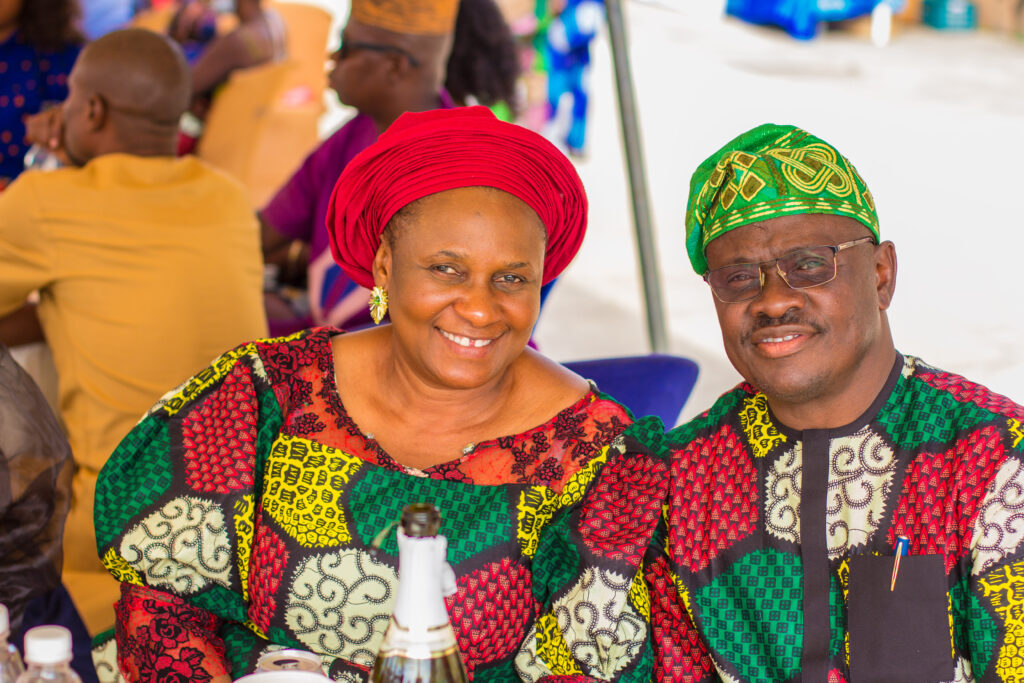
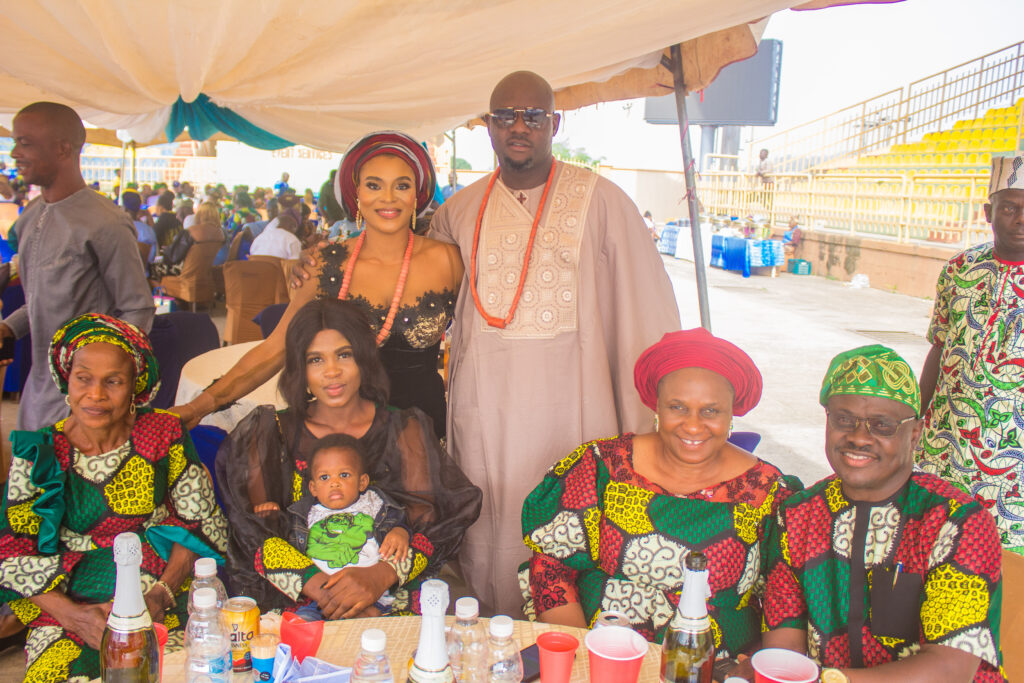
Ado-Ekiti witnessed an outpouring of tributes as family, friends, and dignitaries gathered to honour the life of High Chief Oluwasesan Ogunremi, the Barafon of Ado-Ekiti and a respected leader of the traditional warlord chiefs in the kingdom.
The funeral began with a Christian wake and service of songs at the open grounds of St. Patrick’s Catholic Cathedral, Ado-Ekiti, before proceeding to the deceased’s compound in the Idolofin axis of the town for the main service. The ceremony, attended by top figures from within and outside Ekiti, featured prayers, thanksgiving, and eulogies in recognition of the late chief’s contributions to his community.
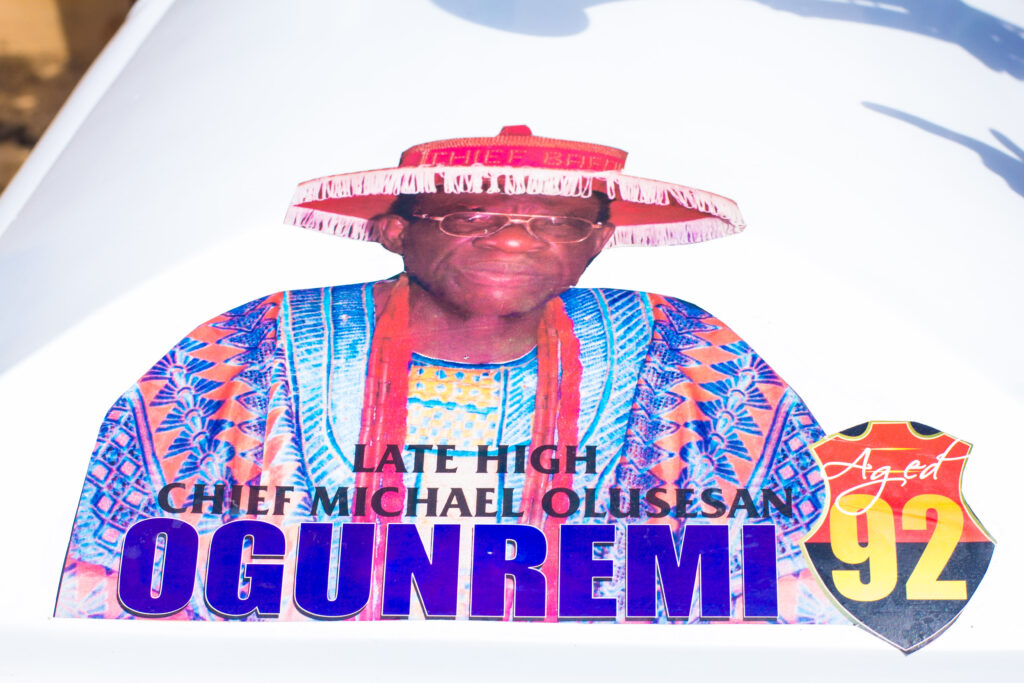
Following the service, Chief Ogunremi’s remains were interred at his residence, accompanied by hymns and tributes from relatives and well-wishers.
A reception later took place at the Ekiti Parapo Pavilion, where guests—including family members who travelled from the United States, United Kingdom, Canada, and Germany—were entertained with a lavish banquet. The event featured a performance by renowned gospel and highlife singer Evangelist Yinka Ayefele, while veteran emcee Olushola Oladele, popularly known as Pa Aristoe, anchored the proceedings.
The gathering attracted prominent personalities such as Mr. Babatope Adebiyi (King Jafil), Mr. Goke Olatunji, Regent Omotunde Adelabu, Hon. Abiodun Fawekun of the Ekiti State House of Assembly, members of the Ewi-in-Council, lawmakers, politicians, business leaders, and artisans.

Born on February 7, 1929, to Mr. Williams Akomolafe Ogunremi and Princess Abigail Ogunremi in Ado-Ekiti, Chief Ogunremi began his education at St. George’s Primary School, Agere, before moving to Lagos for electrical training. He later founded the well-known Micho Electronics and worked with business figures such as Chief Lawrence Omole and Chief Ajanaku in Ilesha.

He married his first wife in Ilesha, where the ceremony was held at St. Mary’s Catholic Church. In 1970, he returned to Ado-Ekiti and established Micho Motors, expanding his business interests into the automobile sector. His ventures took him across Europe, including Austria, Brussels, Italy, and Germany.
In July 1988, he was installed as the Barafon of Ado-Ekiti by Oba George Adelabu, the Ewi of Ado-Ekiti. He became widely known for hosting the Udiroko Festival at his Okeilaja palace, a major cultural event that drew indigenes and chiefs before culminating in celebrations at the Ewi’s Palace. He later served as commissioner of the Ekiti State Electricity Board during the administration of Governor Adeniyi Adebayo.
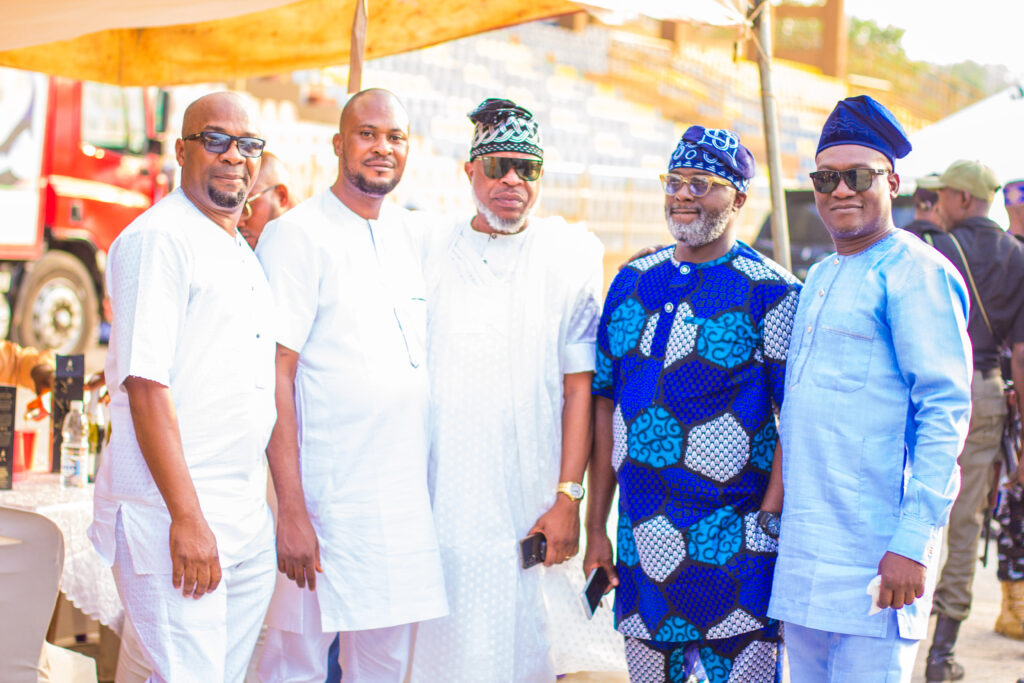
Until his passing, Chief Ogunremi remained an active member of St. Patrick Catholic Cathedral, Ado-Ekiti. He is survived by his wives, children, grandchildren, and great-grandchildren.
$20K, ₦400m mansion, other lavish gifts Peller and Jarvis received for wedding
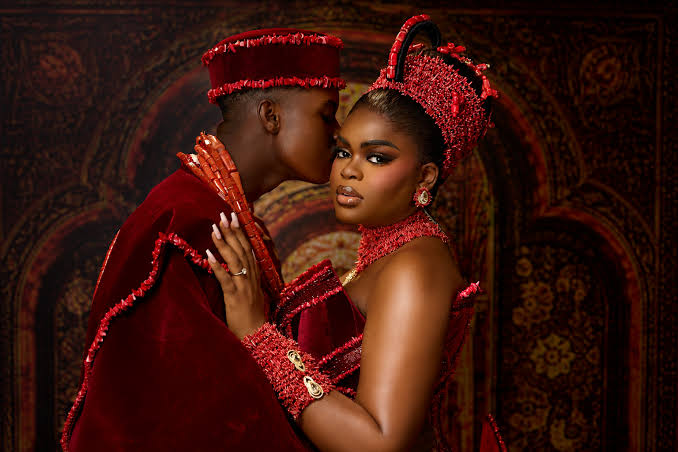
The wedding of TikTok stars Habeeb Hamzat, popularly known as Peller, and Elizabeth Amadou, better known as Jarvis, was filled with memorable moments. Beyond the glamorous outfits, celebrity guests, and cultural displays, it was the extravagant gifts presented to the newlyweds that became one of the biggest talking points.
Even before the wedding day, gifts had already started pouring in, while several admirers promised to present theirs during the ceremony. Peller’s longtime TikTok supporter, Gregory, kicked off the celebrations with a generous wedding gift of $20,000.
Gregory travelled to Nigeria specifically for the wedding and expressed excitement about being part of the occasion. Speaking during the event, he also revealed his interest in investing in Nigeria. “I can’t relocate, but Peller and Peller are going to work on some investment opportunities in Nigeria. One of the things that I really wanna do is open a school here. Hopefully we can do it; that would be my dream
One of the biggest surprises of the day came from Delta based billionaire Mohammed Ochacho, who presented the couple with a mansion worth ₦400 million in Lifecamp, Abuja.
While announcing the gift, the businessman explained that his children encouraged him to make the presentation. “On behalf of my children, I am presenting a brand new house for you worth ₦400 million in Lifecamp, Abuja.”
The gesture came just days after Peller met Ochacho at music executive Soso Soberekon’s event. During that meeting, the billionaire introduced the content creator to some of his associates and had earlier promised him 10 cows as part of his wedding gifts. Peller later jokingly called him out for not fulfilling that promise before the mansion was eventually unveiled.
In June 2026, Peller proposed to Jarvis during a private beachside ceremony at La Palm Royal Beach Hotel in Ghana
Just weeks later, he paid her bride price during a traditional introduction ceremony in Edo State, after which they had a court wedding.
Speaking in a recent interview with Vibe Q, the Afrobeat superstar said he has already executive-produced two movies but wants to get more involved in the film industry.
The singer also disclosed that he has shot a documentary, which will be released soon.
“I want to get into movies. I want to start acting soon. I have invested in two movies already as an executive producer. I also have a documentary coming. It is very very big. And yeah, I do want to act at some point in the future,” he said.
Davido noted that music is innovative like technology, adding that artists need to keep evolving and exploring.
“God has blessed me with an amazing career and fans. I wouldn’t ask for another type of career. Music is what I love and music evolves just like technology.
“There’s always a new sound, a new creative idea and a new way to tell your story,” the singer stated.
Speaking on his career so far and his future in a recent episode of The Vibe podcast, the father of six explained that he won’t encourage any of his children to do music is because of his own experience.
He revealed that his second daughter, Hailey Veronica Adeleke, is already leaning towards music and has a good voice but he’s skeptical about supporting her.
“I don’t want any of my children to pursue music. My second daughter [Hailey] is already leaning towards music. She is the life of the party. She behaves just like me. She actually has a good voice.
“But I know what I went through. Can you go through what I go through? Knowing what I have been through, I’m skeptical about encouraging any of my children to do music,” he said.
Davido, however, added, “But because my parents and my family eventually allowed me chase me dreams, I would never want to block any of my children from chasing their dreams. And if they are good, why not?”
Singer 9ice has sparked debate after saying his parents are his “God” and rejecting other deities, months after revealing he has practised as a Babalawo for 18 years.
9ice is once again at the centre of online debate after declaring that his parents, not any deity, occupy the highest spiritual place in his life.
In a video posted to his Instagram on Sunday, the artist said: “Today I’ll tell you something I don’t really talk about, but I’ll talk today. I love my mum, I love my dad, my god is my mum, my father is my god.” He went further in the comments, clarifying that the reverence typically reserved for an unseen God should instead be directed at one’s parents.
The singer didn’t stop there. “I don’t believe in inferior Gods,” he added, distancing himself from the worship of any other spiritual beings and insisting his belief system doesn’t fit neatly into traditional religious structures.
Predictably, the internet had thoughts, and most of them weren’t kind. A large chunk of reactions accused him of being under the influence of something, with many dismissing the statement outright rather than engaging with it.
This isn’t 9ice’s first brush with this kind of controversy, and that’s part of why the latest clip spread as fast as it did. Back in April, he went viral for a different but related rant, this time aimed squarely at Nigeria’s religious culture.
“You’ll leave Nigeria and go to Mecca to go and lick rock all in the name of Kabba,” he said then, arguing that decades of national prayer hadn’t translated into national progress. He compared Nigeria’s work ethic unfavourably to London’s, joking that between church on Sunday, Bible study on Wednesday and vigil on Friday, “when would you work?”
Some Nigerians found merit in his earlier point about productivity versus performative religiosity. Far fewer have extended that same patience to his spiritual claims, with both the Babalawo reveal and now this parental-deity comparison landing mostly as fodder for mockery rather than genuine reflection.
Recent Comments