Connect with us

Business

Banks begin charging ₦6 per SMS for transaction alerts

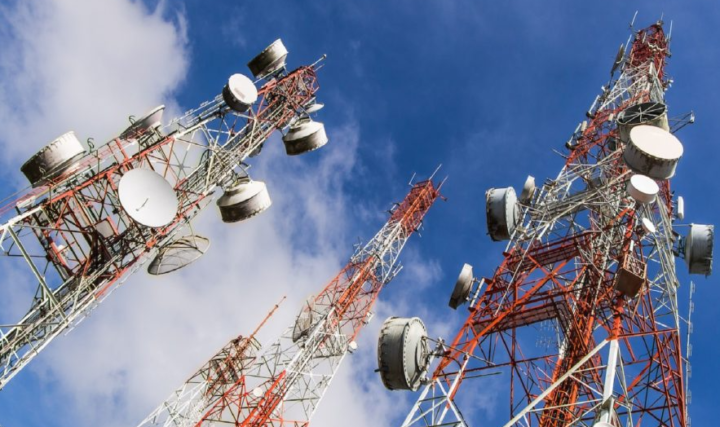
Starting today, May 1, 2025, Nigerian banks will begin charging N6 for every SMS transaction alert, citing the recent hike in telecommunications service rates as the cause of the increase.

The new charge marks a 50% rise from the previous N4 per message, sparking concern among customers already grappling with inflation and rising living costs.

According to a report by Vanguard, the hike in SMS alert fees follows a green light from the Federal Government that allowed telecom providers to raise their tariff. Banks, in turn, are adjusting their service charges to reflect the change, despite the potential burden on users.

In an email sent to its customers, Guaranty Trust Bank (GTBank) wrote:

“Dear Valued Customer, please be informed that effective Thursday, May 1, 2025, the SMS transaction alert fee will increase from N4 to N6 per message. This adjustment is due to a recent increase in telecom rates as communicated by the telecommunication service providers.”

The bank emphasized the importance of SMS alerts in helping customers monitor account activity and prevent fraud, while also offering an opt-out option for those who prefer not to receive alerts via SMS. Customers are advised to update their preferences on the bank’s website. GTBank also noted that SMS alerts sent to international numbers would attract higher fees.

While some customers may consider switching to email or app notifications, the added cost to essential services has reignited conversations around the affordability and transparency of banking in Nigeria.

Click to comment

Leave a Reply

Your email address will not be published. Required fields are marked *

Business

Fidelity Bank appoints new board chairperson

Fidelity Bank Plc has appointed Amaka Onwughalu as its new board chairperson following the completion of the tenure of its former chairperson, Mustafa Chike-Obi.

In a Friday disclosure to the NGX, signed by the company secretary, Ezinwa Unuigboje, the bank said Mr Chike-Obi, a non-executive director and chair of the board, stepped down from the board on 31 December 2025 after completing his tenure, in line with the bank’s policy.

The bank said that under Mr Chike-Obi’s leadership, Fidelity Bank recorded significant growth across key financial indices, with the board successfully executing the bank’s strategy and achieving major milestones aligned with its long-term vision.

It added that the board and management expressed appreciation to Mr Chike-Obi for his contributions to the growth and development of the bank during his time on the board.

As part of its board succession planning policy and to ensure a smooth transition, the board approved the appointment of Mrs Onwughalu, an existing non-executive director, as chairperson of the board with effect from 1 January.

The bank said the Central Bank of Nigeria (CBN) has been formally notified of the appointment.

Mrs Onwughalu joined the board of Fidelity Bank on 17 December 2020. Before she was appointed chairman, she served as chairperson of the board credit committee and the board committee on bank capitalisation.

She is also a member of the board finance and general-purpose committee, the board remuneration, nomination and governance committee, and the board risk management committee, which she previously chaired.

The board said it was confident that Mrs Onwughalu would lead the board in the continued successful execution of the bank’s strategy, adding that the succession arrangement reflects Fidelity Bank’s strong corporate governance standards.

Mrs Onwughalu has over 30 years of banking experience, including more than 10 years in executive management across several financial institutions.

Her experience spans commercial banking, retail banking, treasury management, banking operations, and corporate banking.

She previously served as group managing director of the legacy Mainstreet Bank Limited, where she led the seamless integration of the bank with Skye Bank Plc.

She later served as deputy managing director at Skye Bank Plc until her retirement in July 2016.

She is currently the chief executive officer of Blueshield Financial Services Limited.

Mrs Onwughalu holds a bachelor’s degree in economics from the University of Buckingham, a master’s degree in corporate governance from Leeds Metropolitan University in the United Kingdom, and an MBA from the University of Port Harcourt.

She has attended leadership, executive and business development programmes at several global institutions, including INSEAD in France, IMD Business School in Switzerland, Judge Business School at the University of Cambridge, Columbia Business School in the United States, Stanford Graduate School of Business, Harvard Kennedy School, and the Institute of Directors in Nigeria.

Continue Reading

Business

NCC, CBN’s move to end failed airtime, data transactions

e-naira

The Nigerian Communications Commission (NCC) and the Central Bank of Nigeria (CBN) have joined forces to introduce a unified framework aimed at curbing failed airtime recharges and data transactions on electronic platforms.

The initiative, announced last week, seeks to enforce accountability among telecom operators, payment processors, and financial institutions, ensuring that millions of subscribers get timely redress for failed or incomplete transactions.

The Centre for Digital Justice and Consumer Rights (CDJCR) has applauded the move, describing it as a landmark in consumer protection. In a statement on Monday, October 20, 2025, the group’s Executive Director, Dr Kenechukwu Opara, said the collaboration between the two regulators was long overdue.

“For far too long, consumers have borne the brunt of system failures that are neither their fault nor within their control,” Opara said.

Opara noted that failed recharges and data purchases are among the most frequent complaints by telecom users, with many left stranded due to delayed or unresolved reversals. The new framework, he said, would protect millions of Nigerians who rely on mobile platforms for daily microtransactions.

Consumers are not just users; they are the backbone of the telecom and financial systems. By ensuring that customers get full value for every recharge and data purchase, the NCC is not only protecting rights but also deepening trust in Nigeria’s cashless and digital inclusion policies,” he added.

The CDJCR praised the NCC’s Executive Vice Chairman, Dr Aminu Maida, for prioritising consumer welfare and for pushing a proactive regulatory agenda.

While commending the regulators, Opara urged them to go a step further by enforcing clear timelines, transparent processes, and strict sanctions against operators who fall short of agreed standards.

“We encourage both regulators to publish the service level expectations for all stakeholders — telecom operators, payment processors, and financial institutions — so that consumers know who to hold accountable when transactions fail,” he said.

The group also applauded the CBN for embedding consumer rights in its financial protection framework, especially for low-income Nigerians who depend heavily on digital services for daily payments.

Beyond telecoms, Opara argued that the NCC–CBN partnership should become a model for other sectors where technology, finance, and service delivery intersect.

“This kind of inter-agency collaboration shows that government institutions can truly work in the interest of citizens. What matters now is strict compliance and constant review of the framework to adapt to new technologies and emerging consumer issues,” he said.

Continue Reading

Business

Retail Fuel price drops nationwide At MRS Stations

MRS Oil Nigeria Plc has announced a reduction in the retail price of Premium Motor Spirit (PMS), commonly known as petrol, across its stations nationwide.
The oil marketing firm disclosed on Monday, February 10, through its official X (formerly Twitter) account, that its stations in Lagos will now sell petrol at ₦925 per liter.

The move follows a similar price adjustment by its partner, Dangote Refinery, which recently lowered the ex-depot price to ₦890 per liter.

Beyond Lagos, MRS outlined region-specific pricing, with petrol selling at ₦935 per liter in the South West, ₦945 in the North, and ₦955 in the East.

The company assured consumers that the reduction would not compromise fuel quality.

“The prices may vary, but one thing stays the same—we give you high-quality fuel that keeps your engine running at its best,” the statement read.

MRS also urged customers to remain vigilant and report any stations selling above the new price.

“We are just a call or email away. Let us know if you notice any discrepancies,” the company added.

The price cut is expected to relieve motorists and businesses struggling with high fuel costs.

However, industry analysts say sustained reductions will depend on global crude prices and domestic refining capacity.

Continue Reading

Trending