Connect with us

News

ASUU Declares Pantami’s Professorship Illegal

Isa Pantami

The Academic Staff Union of Universities (ASUU) has declared as illegal the promotion of Communications and Digital Economy Minister, Isa Pantami as a professor at the Federal University of Technology Owerri, FUTO.

The union made this known after her national executive council meeting held in Lagos on Monday, the 14th of February. In a press briefing that followed, the ASUU president Professor Emmanuel Osodeke said that it was an encouragement of illegality for Pantami to serve as a lecturer at a university and professor at the same time.

Also criticizing the government of Isa professorship, the president said;

“From the information made available to us, Dr. Pantami was not qualified and he violated the established procedure for appointment of professor. We are surprised that the government still allowed him to stand.”

Osodeke added that Pantami was merely a lecturer before FUTO decided to make him a professor and as such he was not qualified for the promotion. He also vowed to sanction those involved in Pantami’s promotion including the Vice-Chancellor of FUTO.

“You cannot be a minister and a lecturer in a university. It is an encouragement of illegality. Pantami has to quit as a minister and be tried for doing double jobs within the same federal system. He is not qualified. Pantami should not be treated as a professor. We have resolved to sanction ASUU members involved in his promotion and the VC of FUTO.”

Read Also: Oyo State Government and IBEDC Lock Horns Over Unpaid Debt

It would be recalled that in August of 2021, Isa Pantami was alongside 6 others made a professor by the governing council of FUTO at her 186th meeting. Pantami was made a Professor of Cybersecurity.

ASUU at the time faulted Pantami’s promotion rejecting a report submitted by ASUU Imo State zone. The ASUU President openly criticized the promotion at the time during a conference saying;

“ASUU NEC members, like many other concerned Nigerians, did not accept the report of the ASUU FUTO congress. There are serious doubts and unanswered questions bordering on the qualification of Dr. Isa Ali Ibrahim (Pantami) for the position. The FUTO Branch Committee’s report failed to justify Dr. Isah Ali Ibrahim’s (Pantami’s) appointment to professor on the basis of requisite experience, professional suitability, and antecedents at the Abubakar Tafawa Balewa (ATBU).”

Click to comment

Leave a Reply

Your email address will not be published. Required fields are marked *

Entertainment

Kunle Remi Blasts Government on economic hardship, asks Nigerians to hold government accountable

Nollywood actor Kunle Remi has joined growing public frustration over the rising cost of petrol, using his platform to call for more open conversations about the country’s current economic strain

The actor pushed back against the idea that public figures should stay silent on political or economic issues. “Usually I say things like I don’t really get involved with politics… No, that’s the most stupid statement from anyone in Nigeria right now,” he said. “We should be discussing, we should be talking about it, we should be trying to fix… There’s nothing like sitting on the fence.”

Remi linked his concerns to the direct impact of fuel prices on everyday life, pointing to the ripple effect across businesses and households. “Today I bought petrol for 1,300-something naira,” he said, noting that everything from shopping malls to small barber shops depends heavily on petrol to operate. “I have a child, so I’m thinking not just for myself.”

He also questioned Nigeria’s sensitivity to global oil market shifts, particularly ongoing tensions in the Middle East. “I don’t understand why Nigeria is one of the first countries to be affected by the war in Iran. My spirit is very angry. All the things I’ve been working for is for what?” he said.

His comments come amid sustained pressure on petrol prices across Nigeria. Despite the start of domestic refining operations, including the Dangote Refinery, pump prices have continued to reflect global market volatility. Industry stakeholders have pointed to international crude oil price movements and geopolitical tensions as key factors limiting any immediate relief.

Recent market data shows that a nearly 20 per cent increase in petrol prices implemented last week remains in place, with a national average of about N1,300 per litre. A decline in crude oil prices earlier in the week has yet to translate into lower pump prices, raising further concerns among consumers.

Online, Remi’s remarks have drawn widespread support, with many users commending him for speaking out on an issue that directly affects daily living. Some described his comments as reflective of broader public sentiment, especially as more Nigerians grapple with rising transportation and operating costs.

Continue Reading

Business

NCC orders Telco’s To compensate subscribers for poor network service

The Nigerian Communications Commission (NCC) has instructed Mobile Network Operators (MNOs) to make things right for customers when the network quality in certain areas doesn’t meet the expected standards.

This directive was shared in a statement released on Sunday by Nnenna Ukoha, who leads the Public Affairs Department. The statement emphasized the Commission’s firm view that customers shouldn’t have to bear the entire brunt of service problems if operators aren’t meeting the required service delivery benchmarks.

Part of the statement said “Under this directive, erring operators will compensate affected users directly for breaches of Quality of Service (QoS) Key Performance Indicators (KPIs).
Mobile Network Operators (MNOs) shall be required to pay these compensations for instances of poor quality of service recorded within specified time frames.

The compensation will be provided in the form of airtime credits, calculated based on subscribers’ average spending patterns and their presence within Local Government Areas where service failures occur.”

Ukoha explained that this directive stems from the Commission’s overall approach to regulation, which prioritizes the consumer right at the heart of Nigeria’s telecommunications landscape. They emphasized that today’s telecommunications services are fundamental to economic activity, social connections, and gaining access to digital possibilities.

“When service quality is poor, the consequences affect productivity, commercial activities, and even public confidence in our communications system.

While regulatory fines have traditionally served as a deterrent against poor service delivery, the Commission is adopting a more consumer-focused approach that strengthens accountability within the industry,” the statement said.

The Commission has designed this measure to complement existing and ongoing efforts to strengthen service quality monitoring and enforce performance standards.

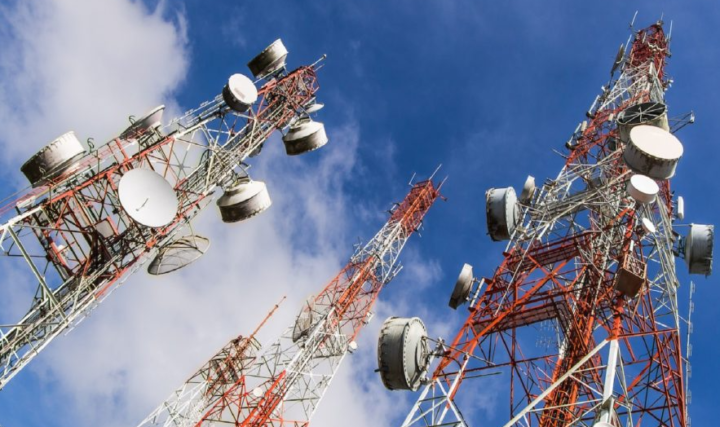
“Further to this directive by the Commission to MNOs on compensation to consumers, the Commission is also mandating Tower Companies that own the critical infrastructure for Quality of Service delivery, such as masts, to invest in infrastructure with measurable outcomes using sums that it has fined these companies, in addition to other financial fines the Commission will deem appropriate.

Continue Reading

News

FG Says Nigeria needs $100 billion to solve power crisis

Nigeria needs over $100 billion in public and private investments to achieve 24-hour electricity, as Power Minister Adebayo Adelabu outlines funding gaps, gas shortages, and sector reforms. The Federal Government has revealed that Nigeria needs more than $100 billion in combined public and private investment across the entire power sector to ensure a reliable 24/7 electricity supply.

At a press conference, where he was updating the public on recent developments and achievements in the power sector under the current government, the Minister of Power, Adebayo Adelabu, acknowledged the recent decline in electricity supply across the country. He apologized to the people of Nigeria and promised to take quick steps to fix the situation.

Put together, we are talking of over $100bn of investments in the upstream, midstream, and downstream of the power sector value chain,” Adelabu said. “This is not a figure to be underestimated, but it is achievable in phases, through a combination of government and private sector participation. Patience and consistent investment are key.”

The minister explained that the government has worked out the costs: bringing an extra 20,000 megawatts of power online would likely set them back around $30 billion, based on an average cost of $1.5 billion for every 1,000MW plant. Getting that power to where it’s needed through transmission lines is estimated at $20 billion, while setting up distribution networks and gas pipelines would cost roughly $25 billion and $22 billion, respectively.

Adelabu pointed out that while South Africa, with a population of about 60 million, is considering a $25 billion private investment in its energy sector, Nigeria’s much larger population – over 200 million – means we need to invest even more, proportionally speaking.

Although there are difficulties now, the minister also emphasized the significant progress that has been made since the current administration took office in September 2023. “For the first time in Nigeria’s history, we achieved a generation peak of 6,001 megawatts in April 2025, and the highest transmission of 5,801 megawatts on March 2, 2025,” he said.

“This was made possible through completion of the Zungeru hydro power plant (700MW), rehabilitation of existing thermal plants, and expansion of renewable energy via mini-grids.”

Installed capacity rose from 13,000MW in 2023 to 14,400MW in 2025, while financial interventions included a N4tn debt restructuring to clear outstanding unpaid subsidies to power-generating companies, of which N501bn has already been raised from the bond market and disbursed.

Continue Reading

Trending