Connect with us

News

AGF Lauds the Merits of The Supreme Court Ruling on LG Autonomy

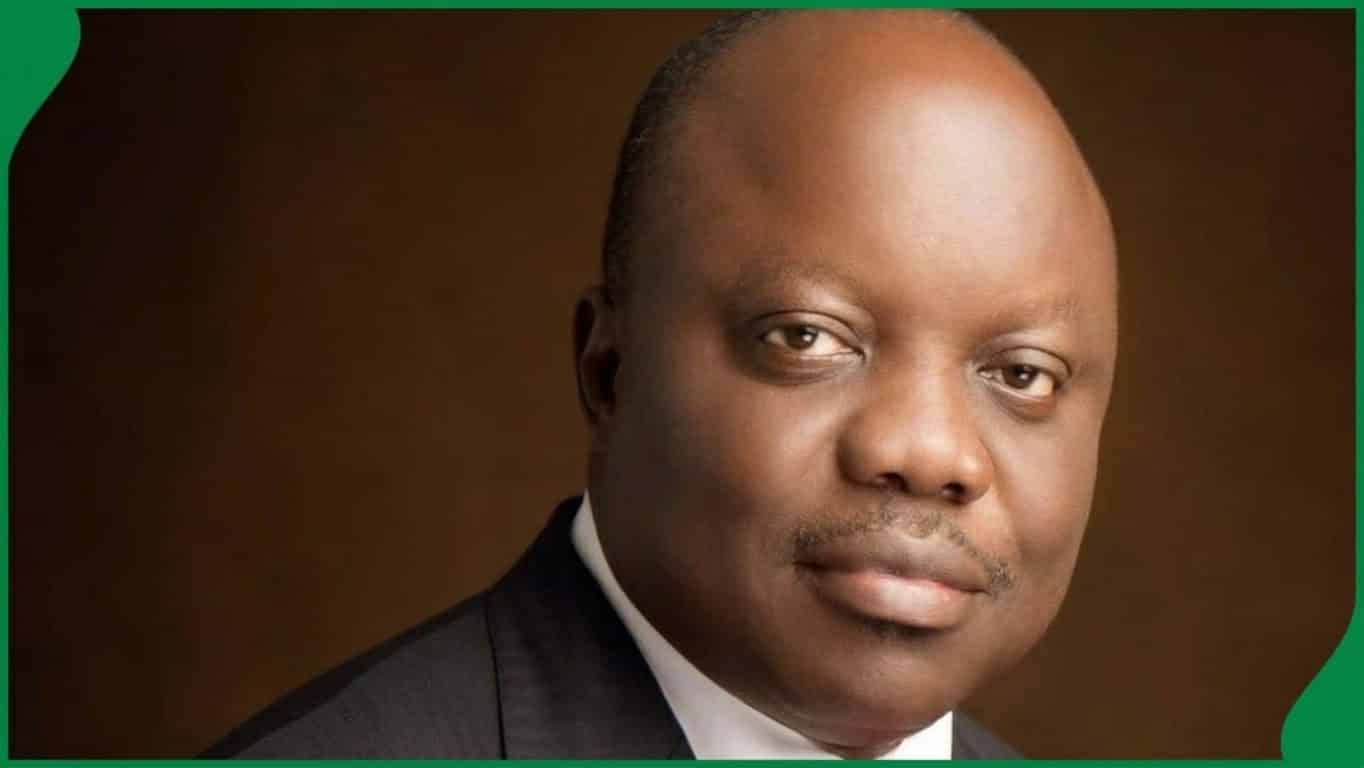
Nigeria’s Attorney General and Minister of Justice, Lateef Fagbemi (SAN), recently highlighted the Supreme Court’s historic decision to grant full financial autonomy to Nigeria’s 774 local governments, describing it as a significant step toward enhancing local governance, security, and human rights.

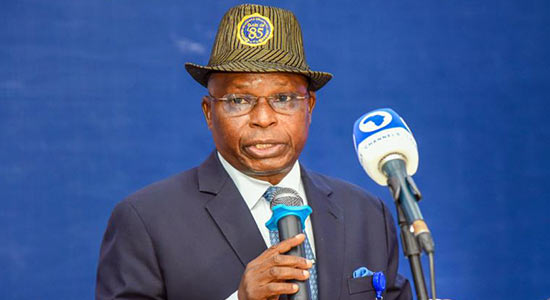
Speaking at the 17th anniversary of the Human Rights Writers Association of Nigeria (HURIWA) in Abuja, Fagbemi noted that local governments, being closest to the grassroots, had been stifled by state governors’ control for over two decades, impairing their effectiveness. He praised the administration of President Bola Tinubu for taking decisive action to address this issue by bringing it before the Supreme Court. The landmark judgment, Fagbemi asserted, will improve local governance and significantly bolster security and access to human rights.

“The administration, led by President Bola Ahmed Tinubu, recognized the critical link between governance, security, and human rights, and made a bold move to seek the Supreme Court’s intervention. This pivotal judgment will enhance local governance and substantially improve security and human rights,” Fagbemi stated.

He stressed the vital connection between governance, security, and human rights for societal progress, urging the exploration of these links to serve citizens better and protect their rights. Fagbemi pointed out that effective governance necessitates collaboration among all branches of government, warning that poor governance can lead to rights erosion and injustice. He also highlighted the judiciary’s role and the recent passage of the Minimum Wage Bill as key measures that could address underlying issues like poverty and unemployment, which contribute to insecurity.

“Without security, rights such as freedom of movement, expression, and association cannot be enjoyed. However, security measures must be balanced with respect for human rights. Excessive force, arbitrary detentions, and abuses undermine our democratic foundations,” Fagbemi emphasized.

He cautioned law enforcement against detaining individuals beyond constitutional limits, warning of penalties for breaches. “Law enforcement agents must respect the law and not detain people beyond reasonable time as stipulated in Section 35 of the Constitution. Due diligence must be exercised before arrests, and detentions beyond constitutional or court-ordered time frames will no longer be tolerated,” he warned.

Fagbemi reaffirmed his commitment to protecting individual rights and ensuring justice, announcing the creation of a Department of Citizens Rights within the Federal Ministry of Justice to handle complaints. He also highlighted recent advancements like the 2024-2025 Strategic Action Plan by the Administration of Criminal Justice Monitoring Committee and the signing of the Practice Direction and Guidelines on Remanding Proceedings by the Chief Judge of the FCT High Court, Justice Husseini Baba Yusuf.

“These milestones in refining the remand system demonstrate our dedication to protecting suspects’ rights and administering justice promptly. In the same spirit, President Bola Ahmed Tinubu exempted the National Human Rights Commission Board from the dissolution of federal agency boards,” Fagbemi concluded.

Click to comment

Leave a Reply

Your email address will not be published. Required fields are marked *

Entertainment

Kanayo O. Kanayo demands lifetime streaming royalties for Nollywood stars

Veteran Nollywood actor Kanayo O. Kanayo has stirred up a conversation the industry has been quietly avoiding for years. The award-winning actor and lawyer recently proposed that the Actors Guild of Nigeria (AGN) implement a policy mandating lifetime royalty payments for all Nigerian actors and actresses featured in films uploaded to streaming platforms.

He also called for a dedicated agency to oversee and enforce compliance nationwide, arguing it would ensure performers earn from their craft long after the cameras stop rolling. The timing of the proposal is telling. Stories of financial ruin among once-beloved Nigerian actors have become alarmingly common.

Last month, veteran actor Abiodun Ayoyinka, widely known as Papa Ajasco, spoke openly about his financial struggles despite decades in the industry.

Two years prior, Hanks Anuku made headlines with public pleas for financial assistance after falling on hard times post-Nollywood.

Patience Ozokwor recently put it bluntly: “The reason why Nollywood actors and actresses are poor is that we don’t get royalties for what we do, we only get paid for our appearance at the shoot.” Her words, along with the others, show a consistent pattern of demand.

The proposal has drawn mixed reactions from industry figures. Writer-director Jadesola Osiberu responded with sarcasm, suggesting that if actors want royalties, perhaps they should also contribute to covering a producer’s losses proportional to their screen time, a dig at the one-sided nature of the demand.

Producer and actress Bolaji Ogunmola was more direct: if actors want backend earnings, they should negotiate equity stakes and invest in projects upfront rather than seek guaranteed payouts after the fact.

It’s a fair challenge. The music industry comparison many have reached for doesn’t quite hold up here.

In more structured film industries, residuals are tied to carefully negotiated distribution contracts and enforced by unions, organisations built over decades with legal infrastructure and industry-wide buy-in.

Continue Reading

News

Katsina plans mass wedding for 1,000 couples

The state government’s maiden welfare initiative will unite 2,000 individuals on April 25, even as armed bandits terrorise nearby communities. The Katsina State Government has announced a mass wedding ceremony for at least 1,000 couples drawn from all 34 local government areas, describing the initiative as a bid to ease the financial burden of marriage on the state’s most vulnerable residents.

The event, scheduled for April 25, 2026, will bring together 2,000 individuals, including widows, orphans, and economically disadvantaged people who, officials say, have long been willing to marry but unable to afford it.

The Director General of the Katsina State Hisbah Board, Malam Abu-Ammar, announced a livelihood support and counselling training session on Thursday.

He said the programme was conceived as part of the government’s efforts to reduce conditions that breed social vices.

“Many widows, orphans, and vulnerable individuals are unable to get married despite their willingness due to socioeconomic challenges,” he said.

The Katsina State Commissioner for Women Affairs, A’isha Malumfashi, added that all 1,000 couples had already undergone medical screening and compatibility verification ahead of the ceremony.

The government has promised support packages for both brides and grooms, though the total budget for the event has not been disclosed.

The announcement, however, comes at a fraught moment for the state. Just hours before it was made public, armed bandits reportedly issued a written ultimatum to communities in Kankia Local Government Area, demanding 700 cows and 1,000 sheep within four days or face violent raids.

Continue Reading

News

Trump threatens 50% tariffs on countries arming Iran

Donald Trump has cautioned that the United States will impose heavy tariffs on any country that is found to supply military weapons to Iran, raising the bar of pressure in the midst of continuing tensions with Tehran.

On Wednesday, in a statement released on his Truth Social platform, Trump stated that any country supplying arms to Iran would be subjected to a 50 percent tariff on all its goods exported to the United States without any delay.

“A country supplying military weapons to Iran will be immediately tariffed on all goods sold to the United States of America, 50 per cent, effective immediately. There will be no exclusions or exemptions,” he wrote.

The warning comes shortly after the U.S. president announced a temporary ceasefire arrangement with Iran following heightened tensions in the region. This happened just hours before the deadline, Donald Trump urged Iran to reopen the Strait of Hormuz. The US President announced a ceasefire facilitated by Pakistan. In a post X, the White House shared that Trump has issued a temporary hold on all military activities in Iran.

President Trump announced that after conversations with Pakistani Prime Minister Shehbaz Sharif and Field Marshal Asim Munir, he will be suspending the bombing and attack on Iran for a period of two weeks after the Iranians agreed to an “immediate and safe opening of the Strait of Hormuz”.

He went ahead and added that the US has already met and exceeded all military objectives and is making progress on a long-term peace agreement with Iran. Trump also said his administration is considering possible economic relief measures for Tehran, noting that Washington is currently engaged in discussions around tariff and sanctions relief.

The developments follow Iran’s reported agreement to temporarily reopen the strategically important Strait of Hormuz, a key global shipping route at the centre of recent geopolitical concerns.

While details of the ceasefire and negotiations remain limited, the latest remarks highlight a mix of economic pressure and diplomatic engagement from Washington as it navigates relations with Tehran.

The series of warnings started in March, when Trump issued one of his most explosive warnings yet to Iran, saying the United States could “completely obliterate” the country’s electric plants, oil wells, and Kharg Island if a deal with a so-called “new and more reasonable regime” fails and the Strait of Hormuz is not reopened.

In a post on social media, Trump claimed the U.S. is in serious discussions with a new Iranian leadership aimed at ending American military operations in the country. However, he warned that failure to reach a deal quickly could prompt devastating military action against Iran’s infrastructure.

Continue Reading

Trending