Like the storyline goes in the popular British historical TV series, Merlin (which explores the life and rule of Britain agelong monarch, King Arthur and his servant/wizard, Merlin), the reappearance of the dreaded vigilante group, Bakassi Boys, maybe the much-needed salvation the people of the South East have been calling out for.
Before the latest developments, the southeastern region of Nigeria has tried to have an effective security apparatus – something that mirrors the Western Nigeria Security Network popularly known as Operation Amotekun.
This has led to the creation of regional security outfits such as the Eastern Security Network (ESN) created by the proscribed Indigenous People of Biafra (IPOB) and the Ebubeage security outfit championed by the South Eastern governors.
However, the impact of both organizations has not been felt and some could argue that the effort has been counterproductive – to say the least.
This may have led to the reappearance of the disbanded matchet-wielding security group – the Bakassi Boys – whose modus operandi is jungle justice. The latter fact is the reason their return may not go down well with a lot of people as it is a touch-and-go kind of situation.
They have been seen in vans on the streets of Awka, Anambra State, chanting war songs and no one can tell why they have suddenly reappeared or who is behind them at this time.
The police seem to be powerless at the moment, however, although he denied knowledge of the fact, the Police Public Relations Officer for the state, Ikenga Tochukwu, has said the command is willing to partner with other stakeholders in combating crimes in the state as the spate of insecurity continue to rise unabated.
It would be recalled that the reign of the group in Nigeria started in 1998 as the crime rate in the commercial city of Aba, Abia state reached astronomical heights. With the blessings of the then governor, Ori Uzor Kalu, they achieved success in terms of crime reduction in the city.
They would further gain national popularity when they moved to Anambra State at the behest of the then governor, Chinwoke Mbadinuju, and saw to the capture and killing of the popular occultic prophet, Eddy Nawgu.
Meanwhile, Ohanaeze Ndigbo Worldwide has denounced efforts made by some private individuals and stakeholders to turn over the management of the Eastern security outfit, Ebubeagu, to them.
In a statement released by the secretary-general of the apex-Igbo organization, Mazi Okechukwu Isiguzoro, said it would be illegal to so as the constitution does not require that they carry out such responsibility. The statement sent to POLITICS NIGERIA on Thursday, June 17, 2021, read:
“Ohanaeze Ndigbo Worldwide has rejected the calls from well-meaning Igbos to take over Ebubeagu Southeast Security Outfit, saying that there were no consultative meetings and people’s approval or authorization for the outfit before its formation.
“Southeast governors should be encouraged to sufficiently provide necessary logistics and reinstate the chairman of southeast Governors Security Committee who resigned based on logistics deficiencies in operation.
“Unlike the Amotekun, where the southwest Governors provided adequate facilities and logistics, Ebubeagu was built on emotional ground and sentiments.
“Ohanaeze Ndigbo are not saddled with the Constitutional rights of protection of lives and properties in the Southeast, and we are independently funded through communal support of Ndigbo without any governments consent, it will be horrible to compound the responsibility of Ebubeagu on us, Southeast Governors are capable of providing logistics and we are in full support of them.”
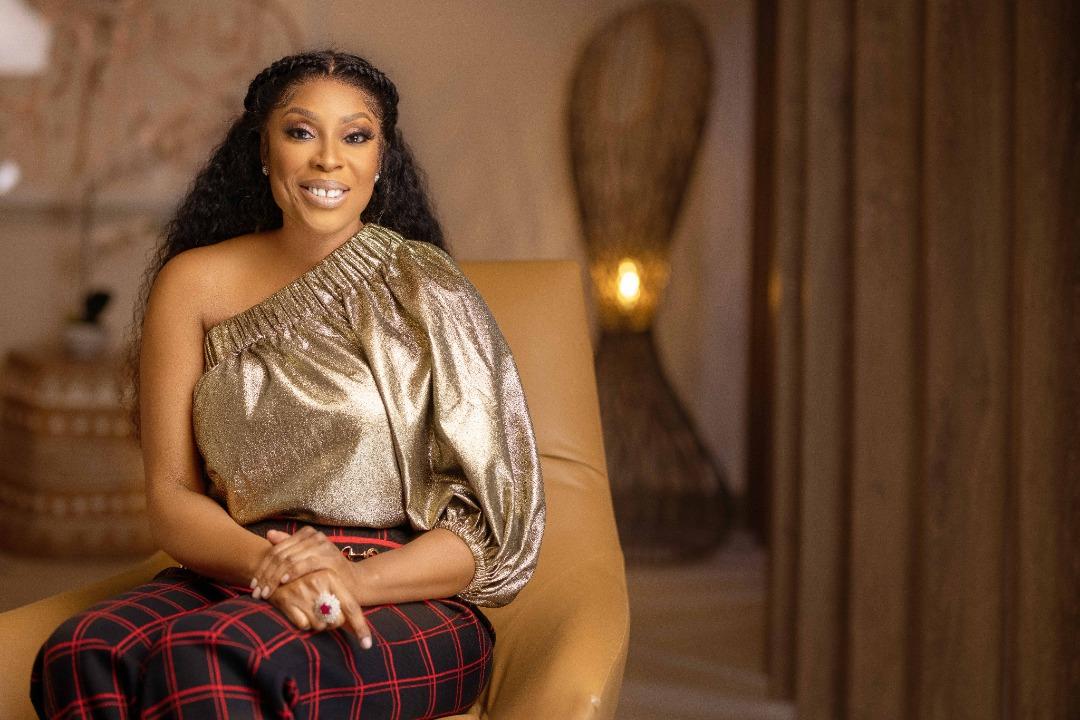
Mo Abudu has opened a London cinema dedicated to African and Black films, saying her experiences growing up in England inspired her to help change perceptions of Africa.Abudu opened EbonyLife Place London on Thursday, 8 October, in south-west London near Nine Elms, with a 160-seat auditorium for films, performances and cultural events. AFP describes it as the UK’s first cinema dedicated exclusively to African and Black films. London Mayor Sadiq Khan joined the opening. The centre will also showcase African food and fashion.
Speaking in an interview with BBC Africa shared on X on Friday, Abudu recalled that when people were asked what came to mind at the word Africa, the answers she heard were “poverty” and babies with flies on their faces. She said those images came largely from what people read in newspapers and saw on television.
Growing up in England, she said, she found herself acting as an ambassador for everything African or Nigerian and was often asked “the most pathetic questions.” She said people sometimes said hurtful things and she learned to swallow them and move on. Racism is real, she said, and the way to deal with it is to offer a different narrative.
She described the cinema as a permanent, round-the-clock home for African and Black films, food and fashion. She stressed that it isn’t meant to keep those films off other platforms, but that because the community is underrepresented, it needs spaces where it feels safe and can share its own content while inviting the rest of the world in. The only way to do that, she said, is to be in charge of the narrative.
Membership will be open to everyone, with no ethnic or nationality restrictions, though details of the scheme have not been announced.
The programme is still being finalised, but Abudu has said it will include films from across Africa and movies that celebrate Black actors and storytelling, alongside the centre’s own productions and the next Black Panther film. She told AFP she would like to open a similar space in Paris, possibly through a partnership.
Regina Daniels marks 25th birthday in a wheelchair, having spent months unable to walk
Nollywood actress Regina Daniels has opened up about her health, appearing in a wheelchair in a birthday video in which she said she has spent months unable to move around as she pleases.
In the video posted on Instagram on Saturday, she marked what she called her silver jubilee and asked God for “total calm” in this new phase of her life. She then addressed the sight of her in a wheelchair directly.
“I know many of you may be surprised seeing me in a wheelchair,” she said. “Well, welcome to another chapter of my life.”
She said fans had been asking about her absence from the public eye, and she chose her birthday to answer those who genuinely care.
According to the actress, she has lost her freedom to move around as she pleases for several months. She said it began as something minor before getting worse, and that things took a major turn after the last public gathering she hosted, her children’s day carnival. Regina said the pain became excruciating. Some days she could walk well, she said, and on others she could not move at all. She said she cried and turned to God for healing.
Her tone then lifted as she said she was speaking because of some really significant developments in her recovery and thanked God. She did not say what condition she has, what caused it, or what treatment she is receiving.
Wike’s son accused of collecting $2.1 million for land in Abuja
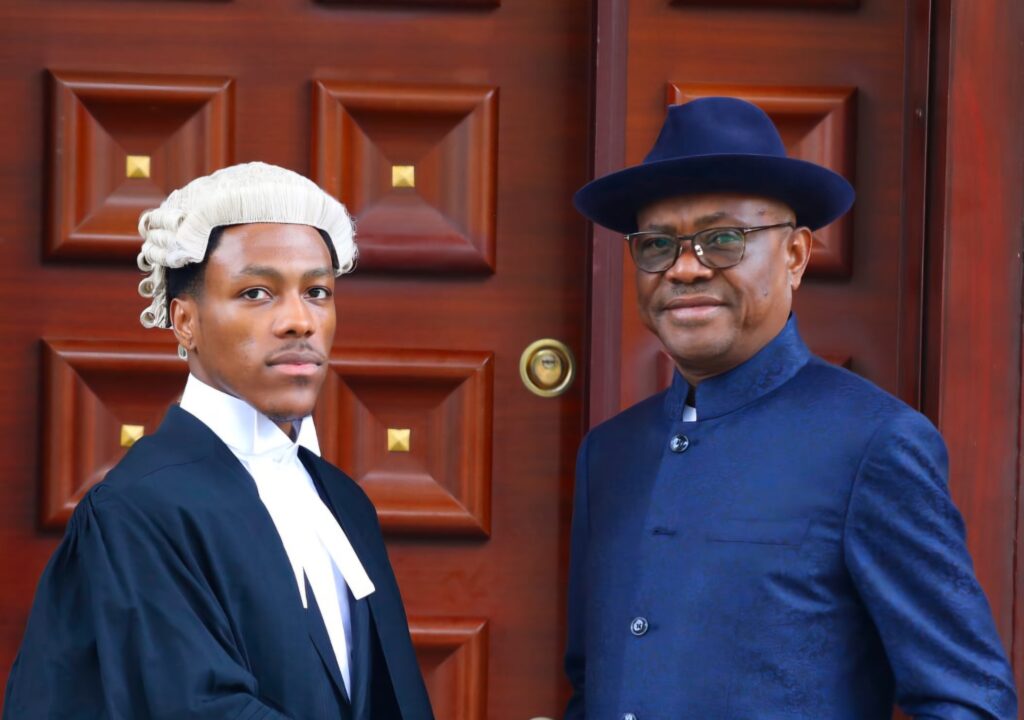
Jordan Ezenwo Nyesom-Wike, son of FCT Minister Nyesom Wike, is facing a civil suit over an alleged $2.1 million land deal gone wrong, with the claimants saying most of that money was intended for his father.
According to court filings, two men say they met Jordan in London and later reconnected with him in Abuja, where they asked for his help securing 60 hectares of land split between Katampe and Guzape. They claim Jordan told them the facilitation fee would come to $2.1 million: $2 million of it earmarked for the minister himself, and $100,000 as Jordan’s own cut.
The claimants say they handed over the full amount on 26 September 2025, at a property in Gwarimpa, Abuja, with several named witnesses present. They allege that after the money changed hands, they got no land and no refund, and Jordan stopped responding to them.
Jordan’s defence hinges on a single detail: he says he wasn’t even in the country that day. Under cross-examination at the FCT High Court in Maitama, he told the court he was on a British Airways flight from Abuja to London on 26 September 2025, the exact date the claimants say the payment was made. He also denies signing any acknowledgment of receipt for the money, calling the signature on the document a forgery.
The exchange prompted the claimants’ lawyer to ask the court to compel Jordan to produce his American passport, to check it against his travel claim, and to write out his name and signature five times on a plain sheet of paper for comparison. Justice Sylvanus Oriji granted both requests. Jordan produced the passport the following day; the court has not yet ruled on whether his account of his whereabouts holds up.
Jordan has said he flagged the allegations himself, in a letter to his father and the Economic and Financial Crimes Commission back in November 2025.
The case has since drawn wider attention. Rights lawyer Chidi Odinkalu has called on Justice Oriji to step aside from the case over family and professional ties, while the Human Rights Writers Association of Nigeria has urged the EFCC and ICPC to open an independent investigation rather than wait for the civil case to conclude.








Pingback: Gumi Accuses The Military Of Being In A Bromance With Bandits; Army Responds