Connect with us

News

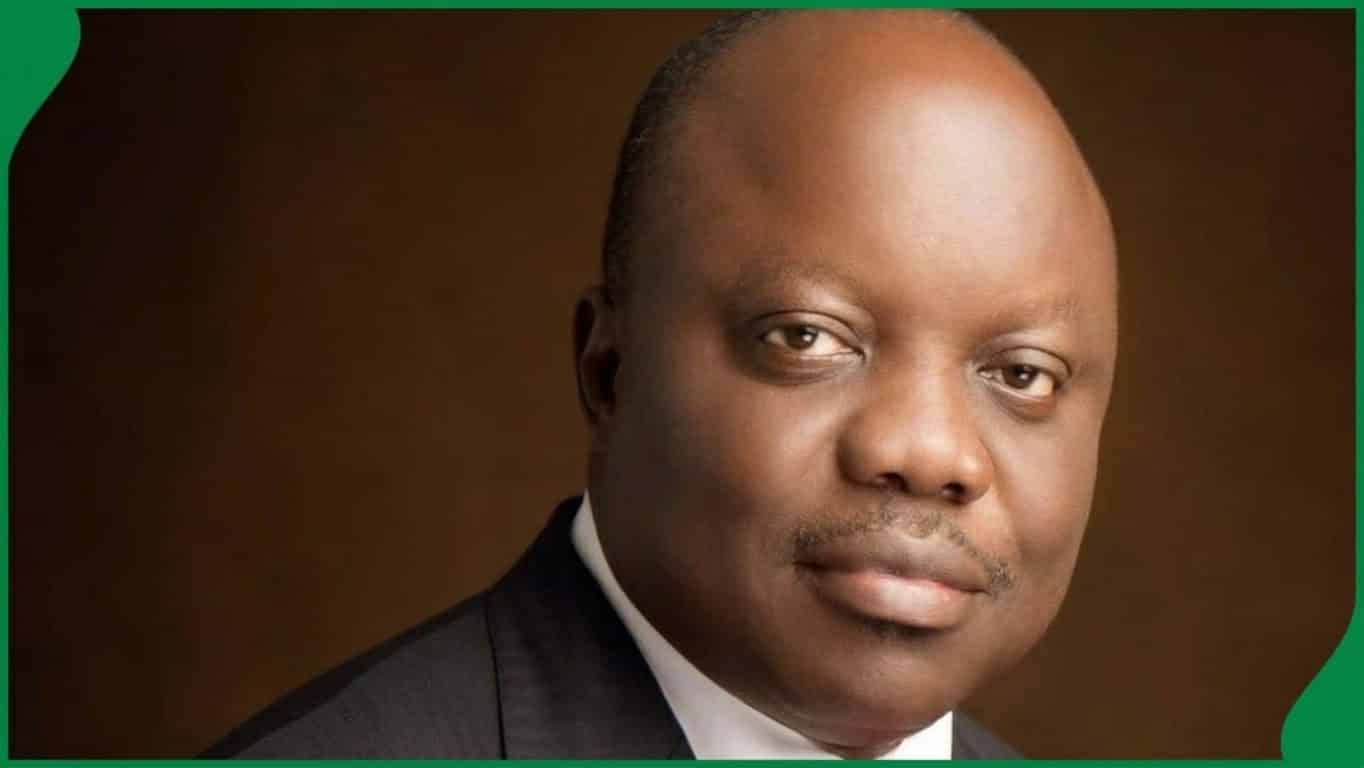
Why Nnamdi Kanu Is A More Dangerous Threat Than Bandits, Boko Haram – ElRufai

Anti-Open Grazing

Following the rearrest, recapture, and subsequent arraignment of Nnamdi Kanu, the leader of the outlawed Indigenous People of Biafra (IPOB), which saw him looking dejected while appearing in handcuffs, many Nigerians have accused the federal government of being biased.

Many claim the Buhari-led administration has not pursued the Boko Haram terrorists, armed bandits, and killer Fulani herdsmen with the same zeal. Some have pointed to the fact that when the school children were been kidnapped almost on a daily basis in the North, the Buhari administration negotiated and paid ransom to the bandits instead of capturing them.

Collaged pictures of meetings held with AK-47 wielding bandits with politicians from the north alongside that of a handcuffed Nnamdi Kanu, looking helpless have since become a meme in the internet space. This has led people to conclude that the Federal Government is partial because the killer herdsmen and bandits are of the Northern Nigeria extraction while the IPOB is of Southern Nigeria – the South East to be precised.

However, Governor Nasir el-Rufai of Kaduna State has come to the fore to deny any such accusation against the FG while explaining the difference between Nnamdi Kanu and the IPOB when compared with the Boko Haram terrorists, Fulani herdsmen, and armed bandits. He described it as “comparing apples to oranges.”

In an interview with BBC Pidgin monitored by Vanguard, the Kaduna State governor, began by saying he is happy the IPOB leader has been recaptured before explaining that the fact that IPOB has a leader, a recognizable face, and calling for the break up of the Nigerian federation, among other things are the reasons they have to be dealt with decisively.

Read Also: El-Rufai And NLC President Ayuba Wabba Clash Over Workers Protest

“I was very happy (when Nnamdi Kanu was arrested) because, first he jumped bail, jeopardizing his sureties. Secondly, a person that challenges the sovereignty and the authority of a state and incites violence; he refers to his own country as a zoo. This should be a message to all these separatists challenging the authority of the Nigerian State to be very careful.

“Nnamdi Kanu is the leader of IPOB, a proscribed organization. He is identifiable, in constant communication and everyone knows where he is. Let’s take Boko Haram for instance. Shekau was in hiding and for the past 10 years and the military had been waging a war to get him.

“It is not like Shekau was in Saudi Arabia, sitting in one place, tweeting about the break up of Nigeria or asking Boko Haram to go and kill Helen and Nasir el-Rufai. Nnamdi Kanu is in one place while Shekau is waging guerrilla warfare. The insurgency is still going on and the Federal Government is not giving up.

“Regarding bandits, they are not centralized under one leadership. Who is the head of the bandits? Who is the equivalent of Nnamdi Kanu with banditry? Bandits are just collections of independent criminals. It is a business for them. It is not a case of Nigeria must break up.

“I want to challenge anyone to tell me the central leader of bandits in the same position as Kanu.”

1 Comment

1 Comment

  1. Pingback: Reno Omokri Makes A U-Turn; Regrets Supporting Nnamdi Kanu, IPOB

Leave a Reply

Your email address will not be published. Required fields are marked *

News

Bayelsa Governor Diri joins APC, Calls The PDP A ‘sinking ship’

Bayelsa State Governor, Douye Diri, on Monday formally dumped the Peoples Democratic Party for the ruling All Progressives Congress, describing his former party as a “sinking ship.”

Vice President Kashim Shettima led a high-powered APC delegation to Yenagoa to receive the governor into the party at a colourful ceremony held at the Samson Siasia Sports Stadium.

Also present were Senate President Godswill Akpabio and governors Dapo Abiodun (Ogun), Lucky Aiyedatiwa (Ondo), Sheriff Oborevwori (Delta), Hope Uzodimma (Imo), and Umo Eno (Akwa Ibom).

Diri’s defection, coming ahead of the 2027 general elections, makes him the fourth PDP governor to join the APC this year, following similar moves by Oborevwori, Eno, and Enugu’s Peter Mbah.

The governor had earlier announced his resignation from the PDP on October 15 during a meeting with his cabinet, citing what he called “obvious reasons.”

Speaking at the event, Diri said he took the decision to save Bayelsa from sharing in the fate of what he described as a dying opposition party.

“We tried all we could to save the PDP, but to no avail. Undertakers were very busy to bury the party,” he said.

“After seeing that the undertakers wanted to bury the PDP, I never wanted my state to be buried alongside it. So after consultations with our leaders, it was incumbent on me as governor to make a decision.”

Diri declared that his defection represented more than a personal political move, calling it a wider “Ijaw realignment.”

“This defection is not a Bayelsa defection. It is the Ijaw nation defecting to the APC,” he stated.

The governor referenced his long history as an Ijaw activist, recalling that the demand for a coastal highway linking Lagos and Calabar had been a major agitation of the Ijaw National Congress since the military era.

“Even during the military regime, we requested a coastal road from Lagos to Calabar,” he said, displaying an old memorandum sent to the then Head of State, Gen. Abdulsalami Abubakar.

“Today, President Bola Tinubu has acted on that demand. He has shown that he loves the Ijaw and Bayelsa people. If we have a President who understands our needs, I have no reason to remain on a sinking ship.”

Diri explained that he had been under pressure from his South-South colleagues to join the ruling party after becoming the only PDP governor left in the region.

Continue Reading

Entertainment

The Cavemen Drop New Album – Cavy In The City

The Cavemen’s new album Cavy in the City dropped on 31 October, and it feels like a confident return to form for the duo: Kingsley Okorie on bass and Benjamin James on drums. Known for reimagining traditional highlife with live instrumentation and rich nostalgia, the brothers once again build on what they’ve always done best.

The project opens with a warm homage to the legends: Rex Lawson, Celestine Ukwu, Osita Osadebe, and Oliver De Coque, instantly grounding it in the music’s roots. Sonically and visually, the record leans into that vintage spirit. Even the cover art, like Show Dem Camp’s Afrika Magic, nods to old Nigerian poster design with its bold, grainy, and proudly analogue look.

Compared to their last album, Love and Highlife (2024), which experimented more with contemporary sounds and collaborations, this one feels closer in spirit to their debut Roots, which is familiar and more faithful to the traditional highlife rhythms that first made fans fall in love.

Their latest album, Cavy in the City, arrives as a confident extension of what they’ve always done best: traditional highlife music reimagined through live instrumentation, arranged sounds, and nostalgia.

The Cavemen are students of sound. Their live-band approach gives the album a steady rhythm, powered by drums, deep basslines, and proper jazz-style. Here, they lean even deeper into highlife, less genre-blending, more focus. The songs blend into each other in a way that’s good enough, although there’s still a little sonic interruption here and there. Those interruptions are enough to distinguish certain tracks.

Production-wise, Cavy in the City is good. The mixing isn’t glossy or overdone; it’s a sort of warm music that fits a Sunday afternoon gathering more than a club night. The Cavemen aren’t trying to modernise highlife, either. They’re preserving it while giving it motion.

Despite the album title, Cavy in the City doesn’t build a clear concept around urban life or transition. Instead, it feels like a loose collection of moments and moods. The interludes do a lot of the heavy lifting, keeping the flow from track to track.

The standout collaborations work smoothly within that flow. Angelique Kidjo on Keep on Moving adds her signature sound, while Pa Salieu brings structure to Gatekeepers. Neither feature disrupts The Cavemen’s sound; they simply expand it.

Continue Reading

News

US President Donald Trump threatens Nigeria on Saturday with possible military action for the alleged “killing of Christians.”

“If the Nigerian Government continues to allow the killing of Christians, the U.S.A. will immediately stop all aid and assistance to Nigeria, and may very well go into that now disgraced country, ‘guns-a-blazing,'” Trump wrote on his Truth Social platform.

The threat came one day after he claimed that Christianity is facing an “existential threat” in Nigeria and accused “radical Islamists” of being responsible for “mass slaughter.”

“I am hereby instructing our Department of War to prepare for possible action. If we attack, it will be fast, vicious, and sweet, just like the terrorist thugs attack our CHERISHED Christians!” said Trump.

He warned the Nigerian government to “move fast.”

The US military “may very well go into that now disgraced country, ‘guns-a-blazing,’ to completely wipe out the Islamic Terrorists who are committing these horrible atrocities”, Trump added.

“I am hereby instructing our Department of War to prepare for possible action. If we attack, it will be fast, vicious, and sweet, just like the terrorist thugs attack our CHERISHED Christians!”

US defence secretary Pete Hegseth responded: “Yes sir … The Department of War is preparing for action. Either the Nigerian Government protects Christians, or we will kill the Islamic Terrorists who are committing these horrible atrocities.”

Islamist extremism in Nigeria shot to international attention more than a decade ago when in 2014 militants from Boko Haram, which violently opposes Western education, kidnapped 276 mostly Christian schoolgirls from the town of Chibok.

But in recent months, senior figures within Trump’s MAGA coalition have seized on ongoing attacks against Christians by Islamist insurgents, with some claiming the targeted killings constitute a “genocide”.

Texas senator Ted Cruz, a Trump ally, claimed last month that the Nigerian government might be complicit in the violence, a suggestion it has categorically denied.

“Officials in Nigeria are ignoring and even facilitating the mass murder of Christians by Islamist jihadists,” Cruz said.

Trump on Friday claimed that Christianity was facing an “existential threat in Nigeria”, blaming “radical Islamists” for the attacks. He designated the West African state as a “country of particular concern” — a step that can precede the imposition of sanctions against a specific nation.

Trump first designated Nigeria as a country of particular concern towards the end of his first term in 2020, but the decision was reversed by the Biden administration the following year.

Continue Reading

Trending