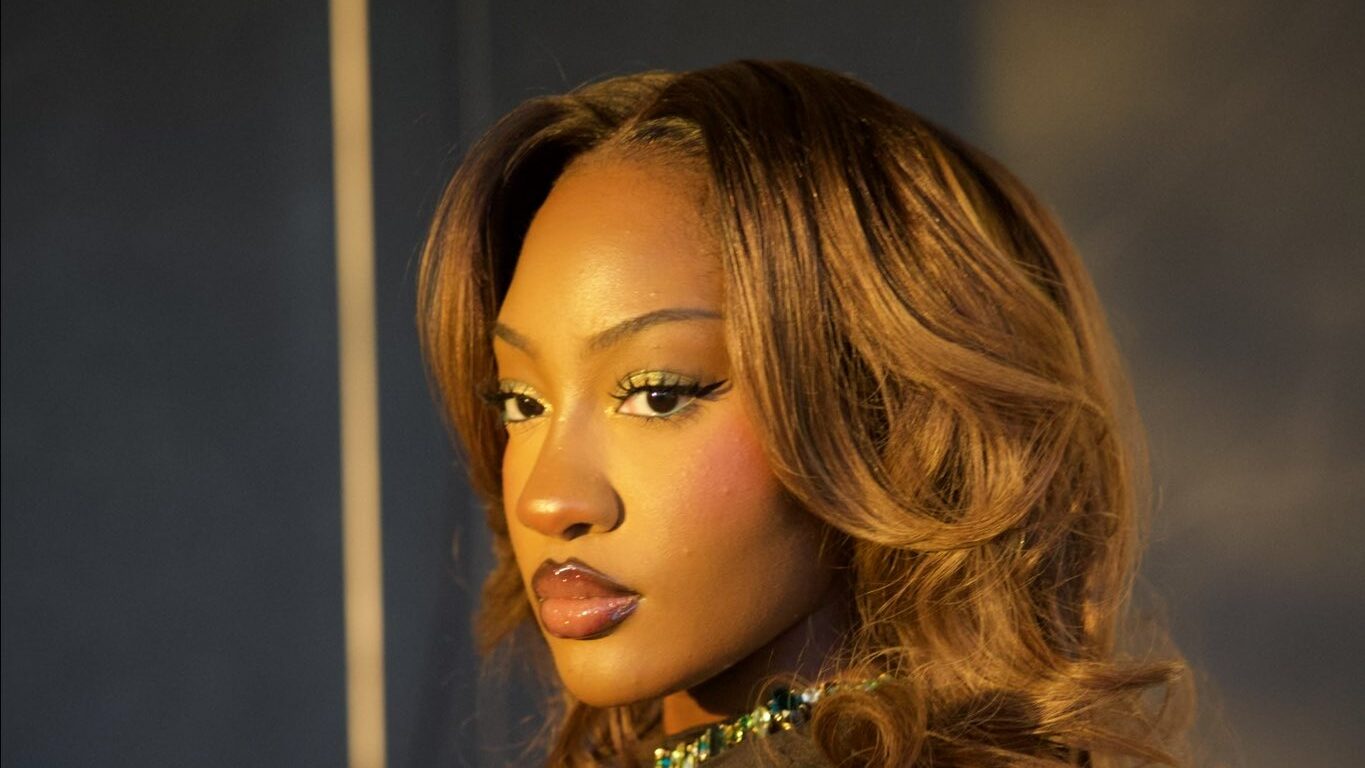
Nigerian singer Tems won the Best African Song Performance award at the 67th Grammys.
The singer who led the Nigerian contingent with three nominations won the prize for her single ‘Love Me Jeje’ in a category packed with Nigerian superstars.
It was a history-making night for the two-time winner who became the first Nigerian artist to win the category.
Other historic feats include Kendrick Lamar’s 5 wins which made him the second rapper since Chidish Gambino to win the Song of the Year and Record of the Year categories.
Kendrick Lamar’s ‘Not Like US’ also won the Best Rap Song, Best Rap Performance, and Best Music Video awards to take his tally to 22 thus becoming the third rapper with the most Grammys.
Jay Z broke his tie (24) with Kanye West after winning for Beyonce’s ‘Cowboy Carter’ which won the Album of the Year, Best Country Album, and also delivered the Best Country Duo Performance.
Beyonce’s three wins at the 67th Grammys extend her record as the artist with the most wins with 35.
See the full winners list below.
Record of the Year
“Not Like Us,” Kendrick Lamar
Album of the Year
“Cowboy Carter,” Beyoncé
Song of the Year
“Not Like Us,” Kendrick Lamar, songwriter (Kendrick Lamar)
Best New Artist
Chappell Roan
Producer of the Year, Non-Classical
Daniel Nigro
Songwriter of the Year, Non-Classical
Amy Allen
Best Pop Solo Performance
“Espresso,” Sabrina Carpenter
Best Pop Duo/Group Performance
“Die With a Smile,” Lady Gaga and Bruno Mars
Best Pop Vocal Album
“Short n’ Sweet,” Sabrina Carpenter
Best Dance/Electronic Recording
“Neverender,” Justice and Tame Impala
Best Dance Pop Recording
“Von Dutch,” Charli XCX
Best Dance/Electronic Album
“Brat,” Charli XCX
Best Remixed Recording
“Espresso (Mark Ronson x FNZ Working Late Remix),” FNZ and Mark Ronson, remixers (Sabrina Carpenter)
Best Rock Performance
“Now and Then,” The Beatles
Best Metal Performance
“Mea Culpa (Ah! Ça ira!),” Gojira, Marina Viotti and Victor Le Masne
Best Rock Song
“Broken Man,” Annie Clark, songwriter (St. Vincent)
Best Rock Album
“Hackney Diamonds,” The Rolling Stones
Best Alternative Music Performance
“Flea,” St. Vincent
Best Alternative Music Album
“All Born Screaming,” St. Vincent
Best R&B Performance
“Made for Me (Live on BET),” Muni Long
Best Traditional R&B Performance
“That’s You,” Lucky Daye
Best R&B Song
“Saturn,” Rob Bisel, Cian Ducrot, Carter Lang, Solána Rowe, Jared Solomon and Scott Zhang, songwriters (SZA)
Best Progressive R&B Album
“So Glad to Know You,” Avery*Sunshine
“Why Lawd?,” NxWorries (Anderson .Paak and Knxwledge)
Best R&B Album
“11:11 (Deluxe),” Chris Brown
Best Rap Performance
“Not Like Us,” Kendrick Lamar
Best Melodic Rap Performance
“3:AM,” Rapsody featuring Erykah Badu
Best Rap Song
“Not Like Us,” Kendrick Lamar, songwriter (Kendrick Lamar)
Best Spoken Word Poetry Album
“The Heart, the Mind, the Soul,” Tank and the Bangas
Best Jazz Performance
“Twinkle Twinkle Little Me,” Samara Joy featuring Sullivan Fortner
Best Jazz Vocal Album
“A Joyful Holiday,” Samara Joy
Best Jazz Instrumental Album
“Remembrance,” Chick Corea and Béla Fleck
Best Large Jazz Ensemble Album
“Bianca Reimagined: Music for Paws and Persistence,” Dan Pugach Big Band
Best Latin Jazz Album
“Cubop Lives!,” Luques Curtis, Zaccai Curtis, Willie Martinez, Camilo Molina and Reinaldo de Jesus
Best Alternative Jazz Album
“No More Water: The Gospel of James Baldwin,” Meshell Ndegeocello
Best Traditional Pop Vocal Album
“Visions,” Norah Jones
Best Contemporary Instrumental Album
“Plot Armor,” Taylor Eigsti
Best Musical Theater Album
“Hell’s Kitchen,” Shoshana Bean, Brandon Victor Dixon, Kecia Lewis and Maleah Joi Moon, principal vocalists; Adam Blackstone, Alicia Keys and Tom Kitt, producers (Alicia Keys, composer and lyricist) (Original Broadway Cast)
Best Country Solo Performance
“It Takes a Woman,” Chris Stapleton
Best Country Duo/Group Performance
“II Most Wanted,” Beyoncé featuring Miley Cyrus
Best Country Song
“The Architect,” Shane McAnally, Kacey Musgraves and Josh Osborne, songwriters (Kacey Musgraves)
Best Country Album
“Cowboy Carter,” Beyoncé
Best Americana Performance
“American Dreaming,” Sierra Ferrell
Best American Roots Song
“American Dreaming,” Sierra Ferrell and Melody Walker, songwriters (Sierra Ferrell)
Best Americana Album
“Trail of Flowers,” Sierra Ferrell
Best Bluegrass Album
“Live Vol. 1,” Billy Strings
Best Traditional Blues Album
“Swingin’ Live at the Church in Tulsa,” The Taj Mahal Sextet
Best Contemporary Blues Album
“Mileage,” Ruthie Foster
Best Folk Album
“Woodland,” Gillian Welch and David Rawlings
Best Regional Roots Music Album
“Kuini,” Kalani Pe’a
Best Gospel Performance/Song
“One Hallelujah,” Tasha Cobbs Leonard, Erica Campbell and Israel Houghton featuring Jonathan McReynolds and Jekalyn Carr; G. Morris Coleman, Israel Houghton, Kenneth Leonard, Jr., Tasha Cobbs Leonard and Naomi Raine, songwriters
Best Contemporary Christian Music Performance/Song
“That’s My King,” CeCe Winans; Taylor Agan, Kellie Gamble, Lloyd Nicks and Jess Russ, songwriters
Best Gospel Album
“More Than This,” CeCe Winans
Best Contemporary Christian Music Album
“Heart of a Human,” Doe
Best Roots Gospel Album
“Church,” Cory Henry
Best Latin Pop Album
“Las Mujeres Ya No Lloran,” Shakira
Best Música Urbana Album
“Las Letras Ya No Importan,” Residente
Best Latin Rock or Alternative Album
“¿Quién Trae las Cornetas?,” Rawayana
Best Música Mexicana Album (Including Tejano)
“Boca Chueca, Vol. 1,” Carín León
Best Tropical Latin Album
“Alma, Corazón y Salsa (Live at Gran Teatro Nacional),” Tony Succar, Mimy Succar
Best Global Music Performance
“Bemba Colora,” Sheila E. featuring Gloria Estefan and Mimy Succar
Best African Music Performance
“Love Me JeJe,” Tems
Best Global Music Album
“Alkebulan II,” Matt B featuring Royal Philharmonic Orchestra
Best Reggae Album
“Bob Marley: One Love — Music Inspired by the Film (Deluxe),” (Various Artists)
Best New Age, Ambient or Chant Album
“Triveni,” Wouter Kellerman, Eru Matsumoto and Chandrika Tandon
Best Children’s Music Album
“Brillo, Brillo!,” Lucky Diaz and the Family Jam Band
Best Comedy Album
“The Dreamer,” Dave Chappelle
Best Audio Book, Narration and Storytelling Recording
“Last Sundays in Plains: A Centennial Celebration,” Jimmy Carter
Best Compilation Soundtrack for Visual Media
“Maestro: Music by Leonard Bernstein,” Bradley Cooper, Yannick Nézet-Séguin (London Symphony Orchestra)
Best Score Soundtrack for Visual Media (Includes Film and Television)
“Dune: Part Two,” Hans Zimmer, composer
Best Score Soundtrack for Video Games and Other Interactive Media
“Wizardry: Proving Grounds of the Mad Overlord,” Winifred Phillips, composer
Best Song Written for Visual Media
“It Never Went Away,” from “American Symphony”; Jon Batiste and Dan Wilson, songwriters (Jon Batiste)
Best Music Video
“Not Like Us” (Kendrick Lamar), Dave Free and Kendrick Lamar, video directors; Jack Begert, Cornell Brown, Sam Canter, Jared Heinke, Jamie Rabineau and Anthony Saleh, video producers
Best Music Film
“American Symphony” (Jon Batiste) Matthew Heineman, video director; Lauren Domino, Matthew Heineman and Joedan Okun, video producers
Best Recording Package
“Brat,” Charli XCX, Brent David Freaney and Imogene Strauss, art directors (Charli XCX)
Best Boxed or Special Limited Edition Package
“Mind Games,” Simon Hilton and Sean Ono Lennon, art directors (John Lennon)
Best Album Notes
“Centennial,” Ricky Riccardi, album notes writer (King Oliver’s Creole Jazz Band and Various Artists)
Best Historical Album
“Centennial,” Meagan Hennessey and Richard Martin, compilation producers; Richard Martin, mastering engineer; Richard Martin, restoration engineer (King Oliver’s Creole Jazz Band and Various Artists)
Best Engineered Album, Non-Classical
“I/O,” Tchad Blake, Oli Jacobs, Katie May, Dom Shaw and Mark “Spike” Stent, engineers; Matt Colton, mastering engineer (Peter Gabriel)
Best Engineered Album, Classical
“Bruckner: Symphony No. 7; Bates: Resurrexit,” Mark Donahue and John Newton, engineers; Mark Donahue, mastering engineer (Manfred Honeck and Pittsburgh Symphony Orchestra)
Producer of the Year, Classical
Elaine Martone
Best Immersive Audio Album
“I/O (In-Side Mix),” Hans-Martin Buff, immersive mix engineer; Peter Gabriel, immersive producer (Peter Gabriel)
Best Instrumental Composition
“Strands,” Pascal Le Boeuf, composer (Akropolis Reed Quintet, Pascal Le Boeuf and Christian Euman)
Best Arrangement, Instrumental or A Cappella
“Bridge Over Troubled Water,” Jacob Collier, Tori Kelly and John Legend, arrangers (Jacob Collier featuring John Legend and Tori Kelly)
Best Arrangement, Instruments and Vocals
“Alma,” Erin Bentlage, Sara Gazarek, Johanye Kendrick and Amanda Taylor, arrangers (säje featuring Regina Carter)
Best Orchestral Performance Award
“Ortiz: Revolución Diamantina,” Gustavo Dudamel, conductor (Los Angeles Philharmonic)
Best Opera Recording Award
“Saariaho: Adriana Mater,” Esa-Pekka Salonen, conductor; Fleur Barron, Axelle Fanyo, Nicholas Phan and Christopher Purves; Jason O’Connell, producer (San Francisco Symphony; San Francisco Symphony Chorus; Timo Kurkikangas)
Best Choral Performance
“Ochre,” Donald Nally, conductor (The Crossing)
Best Chamber Music/Small Ensemble Performance
“Rectangles and Circumstance,” Caroline Shaw and Sō Percussion
Best Classical Instrumental Solo
“Bach: Goldberg Variations,” Víkingur Ólafsson
Best Classical Solo Vocal Album
“Beyond the Years — Unpublished Songs of Florence Price,” Karen Slack, soloist; Michelle Cann, pianist
Best Classical Compendium
“Ortiz: Revolución Diamantina,” Gustavo Dudamel, conductor; Dmitriy Lipay, producer
Best Contemporary Classical Composition
“Ortiz: Revolución Diamantina,” Gabriela Ortiz, composer (Gustavo Dudamel, Los Angeles Philharmonic and Los Angeles Master Chorale)
Best American Roots Performance
“Lighthouse,” Sierra Ferrell
Best Rap Album
“Alligator Bites Never Heal,” Doechii






Recent Comments