Connect with us

News

Opposition Cranks Up Against Tinubu’s Proposed Tax Reforms

Touted as a solution to Nigeria’s economic challenges, the bill has faced accusations of poor timing, inadequate consultation, and potential harm to already struggling Nigerians. The heated debates that have ensued underscore mounting regional tensions over the bill’s potential economic and social impact, with calls for more inclusive deliberation before any final decision is made.

Borno State Governor, Professor Babagana Zulum, has openly addressed the growing controversy surrounding the proposed tax reform bills, warning President Bola Tinubu about the potential fallout.

Speaking during an interview with Channels Television on Sunday, December 1, Zulum acknowledged Tinubu’s ability to push the legislation forward but stressed the consequences for Nigerians.

“We know the power of the president. I’m a system man; I respect him,” Zulum said. “If the president wants to use his power to pass the tax bill, he may have his way, but it has its consequences for the people.”

The tax reform bill, which recently passed its second reading in the Senate, has encountered resistance, particularly from northern elites.

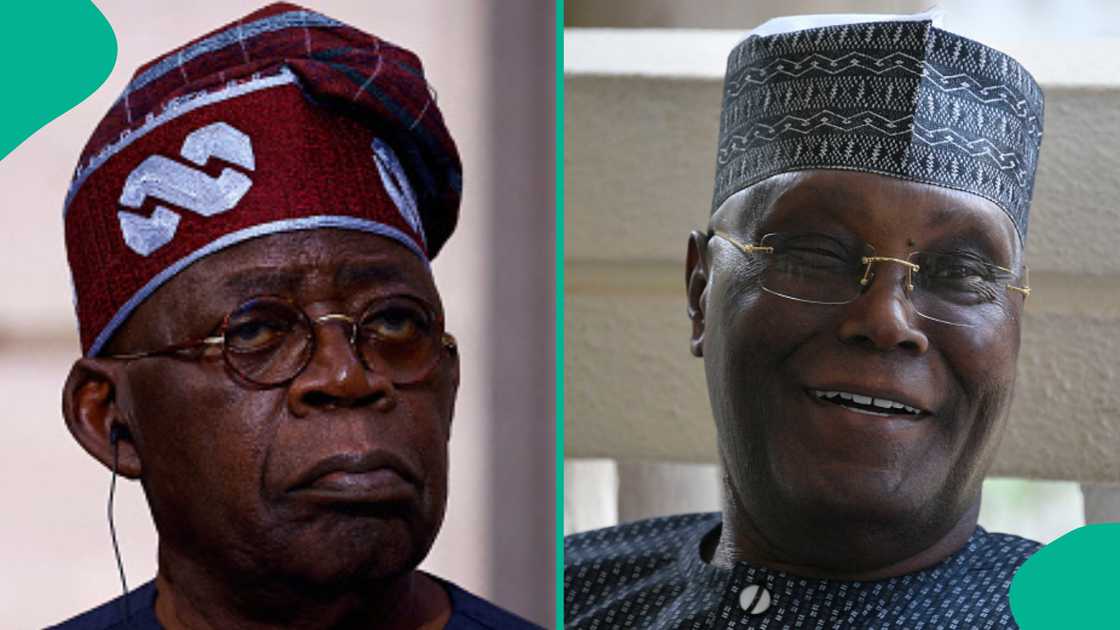
Former Vice President Atiku Abubakar emerged as a leading voice of opposition, urging the National Assembly to revisit and publish the resolutions of the National Economic Council (NEC).

“I call on the NASS to revisit and make public the resolutions of the NEC… The contents of the Bills must align with the interests of the vast majority of Nigerians,” Atiku said.

He emphasized the need for a fiscal system rooted in justice, fairness, and equity and warned against policies that exacerbate regional inequality.

Senator Rabiu Kwankwaso, former Kano State governor, criticized the bill’s timing, citing Nigeria’s ongoing economic struggles.

In a strongly worded post on X, he stated, “Now is not the right time to review VAT or introduce new taxes… The government must prioritize relief for the people rather than impose additional burdens.”

Senator Ali Ndume, known for his fiery rhetoric, argued that raising taxes amid widespread poverty is illogical.

“This tax they’re talking about… We are almost losing the middle class in Nigeria. It is either you have it or you don’t. Those in the middle are being squeezed out,” he stated.

Ndume accused the bill’s architects of setting up Tinubu for failure and criticized its potential to worsen Northern poverty.

“Tax those who can afford it. Big companies evade taxes, yet you want to squeeze ordinary Nigerians further,” he argued

The National Economic Council, comprising all 36 state governors, has also voiced strong reservations.

The council criticized the lack of transparency and communication surrounding the bill and urged President Tinubu to drop it.

Citing misinformation and miscommunication, the NEC emphasized the need for broader consultations to ensure the bill aligns with Nigeria’s socioeconomic realities.

As the Tax Reform Bill advances through the National Assembly, the voices of opposition continue to grow louder.

Click to comment

Leave a Reply

Your email address will not be published. Required fields are marked *

Entertainment

Davido, Rema, Fally Ipupa To headline Afro Nation Portugal 2027

Afrobeat icon Davido, Rema and Fally Ipupa will headline Afro Nation Portugal 2027, with Omah Lay, Victony and other stars also confirmed for the festival, continuing Nigeria’s dominant run at one of the world’s biggest celebrations of Afrobeats and Amapiano. The festival takes place in Portimão from 9 to 11 June 2027, on the sands of Praia da Rocha, running about a month earlier than it has in recent years.

The first wave of roughly 30 confirmations describes Davido, Rema and Fally Ipupa as “three giants of African music,” all returning to the festival. Also confirmed for the Lit stage are Omah Lay, Odeal, Shenseea, Valiant, Victony, Bamby and Miimii KDS, with South Gidi (the live project from DJ Tunez and DJ Maphorisa featuring Wizkid and Mavo) closing out the final night.

The Piano People stage returns, led by amapiano pioneer Kabza De Small and duo TxC, with Dlala Thukzin joining as a special guest, alongside 031Choppa, 2woBunnies, Benzo, Thatohatsi, Uncool MC, W4DE, Xduppy B2B Al Xapo, Young Stunna and Zee Nxumalo.

The lineup extends a pattern that has defined Afro Nation Portugal since it launched in 2019 with Nigerian superstars taking the centre stage nearly every year. Past headliners have included Burna Boy, Wizkid, Davido, Megan Thee Stallion, 50 Cent, Chris Brown and Nicki Minaj, with the festival credited with helping push Afrobeats and Amapiano onto global stages.

This year’s edition, the sixth, wrapped in July with Wizkid and Asake leading the lineup, alongside Burna Boy, who launched his album No Sign of Weakness from the festival’s beach stage in 2025. Uncle Waffles headlined the Piano People stage, with Gunna and Kehlani appearing as special guests.

Rema is no stranger to the show either; he headlined the 2024 edition alongside Asake, J Hus and Tyla, riding the global success of ‘Calm Down.’ Davido, meanwhile, returns to a festival he has previously headlined, while Fally Ipupa comes back after main-stage appearances in recent years, including 2024.

Since its debut, Afro Nation has expanded beyond Portugal to Ghana, Puerto Rico, Miami and Detroit, but the Portugal edition remains its flagship, drawing tens of thousands of fans from across the world each summer for a weekend built around African music.

Continue Reading

News

Outgoing LASU VC Says Universities May Need To Charge N 1 Million To Break Even

Former Lagos State University Vice-Chancellor Professor Ibiyemi Olatunji-Bello, has proposed a minimum annual tuition of ₦1 million for public universities seeking financial independence.

She proposed this while reflecting on her five-year tenure as LASU vice-chancellor, which ended on September 19, 2026. She said the rising cost of running a university has made it difficult for institutions to depend on internally generated revenue alone. According to Olatunji-Bello, LASU’s internally generated revenue increased from about ₦3 billion when she assumed office in 2021 to ₦13 billion during her tenure. But even that increase, she said, is not enough to meet the university’s financial obligations.

“Right now, LASU does not have financial self-sustainability,” she said, adding that the university’s monthly payroll is now more than ₦1 billion.

Her argument is that universities seeking financial independence would have to charge substantially higher fees.

Olatunji-Bello pointed to the difference between what some secondary schools charge and the fees paid by students at some public universities. While some secondary schools charge more than ₦1 million per term, she noted that some universities still collect around ₦100,000 annually.

“So, any public university that wants to sustain financial independence will have to charge school fees of not less than N1 million per student,” she said.

She also argued that maintaining academic standards requires significant investment, telling parents to prioritise their children’s education. But the ₦1 million proposal comes at a time when the Federal Government is also asking universities to look beyond tuition for additional funding.

Education Minister Maruf Tunji Alausa recently urged vice-chancellors to diversify their revenue sources, saying government funding alone cannot sustain universities. The National Universities Commission said Alausa disclosed that only four of Nigeria’s 68 federal universities were making meaningful use of alternative funding opportunities, including research grants, endowments, alumni donations, philanthropy and partnerships with industry.

That means the funding debate is not simply about how much students should pay. Universities are also being pushed to become better at raising money from research, alumni, businesses and other sources. During her tenure, Olatunji-Bello said LASU increased its revenue by introducing new academic programmes, expanding postgraduate education, digitalising services and developing other income-generating activities.

Continue Reading

Entertainment

Charly Boy celebrates daughter’s engagement to a Woman

Veteran Nigerian entertainer Charles Oputa, popularly known as Charly Boy, has publicly celebrated the engagement of his daughter, Adaeze, to a woman, drawing a wide range of reactions from Nigerians online. Charly Boy shared a video from the engagement ceremony on his Instagram page on Thursday, referring to the couple as his “beautiful Princess and her Husband” and asking his followers to extend their well wishes. “Folks, wish dem well for me,” he wrote.

Adaeze also announced the engagement herself, sharing a photo with her partner alongside the caption “WE’RE ENGAGED!” and the hashtag #mrsandmrsgray2027. She expressed excitement about the relationship in her post, writing, “Here’s to a lifetime of love, laughter, growth, and making beautiful memories together. I can’t wait for everything God has in store for us. Forever sounds even sweeter with you.”

The announcement quickly drew attention online, with reactions split between congratulatory comments and criticism, reflecting Nigeria’s broader social and legal climate around same-sex relationships, where such unions remain both criminalised and widely stigmatised. Adaeze was previously married to a man, Metu Anu, in a traditional wedding held in Abuja in February 2018, a union that later ended in divorce.

This isn’t the first time a member of the Oputa family has publicly navigated a same-sex relationship. Charly Boy’s other daughter, Dominique “Dewy” Oputa, is also known to be in a relationship with a woman, both daughters currently reside outside Nigeria.

Charly Boy, also known as Area Fada, has built a decades-long career and public persona around unconventional, often boundary-pushing views on social and cultural issues in Nigeria. He has spoken previously about surviving prostate cancer, being sexually abused by a nanny during his childhood, and long-standing tension within his own nearly 50-year marriage to his wife, Diane.

He has also addressed public speculation about his own gender expression and sexuality directly, arguing that embracing traits often associated with femininity does not diminish a man’s identity.

The entertainer has 10 children and 14 grandchildren in total, and has continued to speak openly about his family throughout his public career, even as his views have periodically placed him at odds with more conservative segments of Nigerian society.

Continue Reading

Trending