Connect with us

News

I listen to those who insult me and learn governance lessons from them – Tinubu

pro-Tinubu group

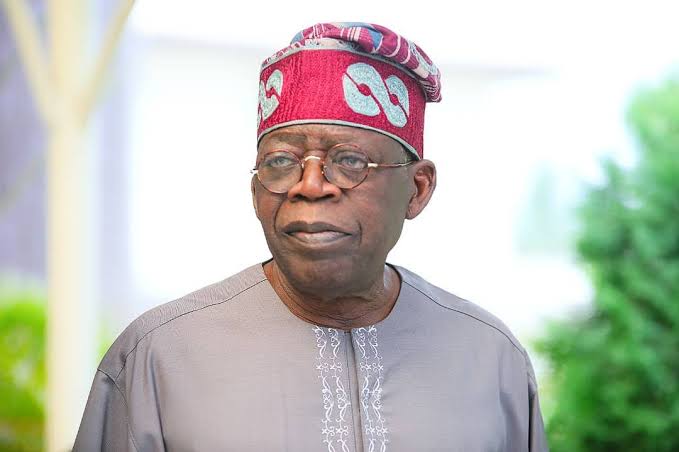
President Bola Tinubu said he has grown a thick skin against insults from his critics and political enemies to the point that he now learns governance lessons from them.

Tinubu disclosed this while speaking at the town hall meeting held at the Benue State Government House in Makurdi on Wednesday, June 18, 2025.

The meeting was part of activities scheduled for the President’s visit in the wake of recent killings in the state. Governor Rev. Fr. Hyacinth Alia, Secretary to the Government of the Federation, Senator George Akume, and other dignitaries, including North Central governors, received the President.

“No matter what I do, they will insult me. I read the papers and I learn from their criticism because I can’t see it all,” the President said.

Over 200 residents of the Yelewata community in Guma Local Government Area of the state were killed when assailants suspected to be herders invaded on Friday, June 13, 2025.

The unfortunate incident attracted both nationwide and foreign attention, with international media outlets reporting it. Following the outrage, Tinubu visited Benue on Wednesday to console the surviving victims of the killings.

Addressing the Governor, the President said, “Your political enemies don’t want you to succeed. Are you just realising that?”

Tinubu also urged leaders from across the region to work together as part of a non-kinetic approach to solving the hydra-headed insecurity situation.

“We cannot do without another.

“I will want us to create a leadership committee now to meet in Abuja to fashion out a strategy for lasting peace. And I am ready to invest in that peace,” he said.

Tinubu also charged security agencies to go after the perpetrators of the Benue killings, questioning the police on why no suspects have been arrested since the incident.

Police, I hope your men are on alert to listen to information. How come no arrest has been made?” the displeased President asked.

“I expect there should be arrests of those criminals.”

“I give you the assurance that we will find peace and convert this tragedy to prosperity.”

Click to comment

Leave a Reply

Your email address will not be published. Required fields are marked *

News

Senate moves to Mandate Facebook, TikTok, X, others to open offices in Nigeria

Electronic Transmission of Results

The Nigerian Senate has moved a step closer to requiring major social media platforms such as Facebook, TikTok, X, Instagram and YouTube to establish physical offices in Nigeria after stakeholders backed a proposed bill during a public hearing in Abuja. The proposal is aimed at strengthening regulation, improving accountability and increasing the contribution of global technology companies to Nigeria’s digital economy.

The bill, sponsored by Senator Ned Nwoko (APC, Delta North), seeks to amend the Nigeria Data Protection Act, 2023, to make it mandatory for social media platforms, data controllers and data processors operating in Nigeria to maintain functional offices within the country’s territorial boundaries.

Speaking during the public hearing organised by the Senate Committee on ICT and Cyber Security, Senate President Godswill Akpabio, represented by Deputy Senate Leader Lola Ashiru, said the proposed legislation is not intended to stifle innovation or discourage investment. Instead, he said it is designed to encourage stronger engagement between global technology firms, Nigerian users and regulators.

Defending the bill, Nwoko said many multinational technology companies generate significant revenue from Nigeria but have no physical presence in the country. According to him, requiring local offices would improve compliance with Nigerian laws, strengthen data protection enforcement, enhance consumer protection, increase tax compliance and create employment opportunities for Nigerians

He also argued that countries such as the United Kingdom, India, South Africa, Ireland, Singapore, the United Arab Emirates and Brazil have attracted major technology firms to establish local operations, despite some having smaller populations or digital markets than Nigeria. He questioned why Africa’s largest digital market should not enjoy similar investments and benefits.

Chairman of the Senate Committee on ICT and Cyber Security, Senator Shuaib Salisu, said the proposed amendment is intended to improve Nigeria’s regulatory engagement with global technology companies while strengthening the country’s digital ecosystem.

The public hearing also considered a separate bill seeking to establish an Artificial Intelligence Academy in Omuo-Ekiti, Ekiti State, with stakeholders expressing support for both proposals.

The bill has not yet become law. Following the public hearing, the Senate committee is expected to review memoranda submitted by stakeholders before presenting its report to the Senate for further legislative consideration.

Continue Reading

Entertainment

‘77% of Nigerian women bleach their skin’ — Nollywood actress Beverly Naya speaks up

Nollywood actress Beverly Naya has opened up about the personal experience that inspired her Netflix documentary Skin, tracing it back to bullying she faced as a teenager in London.

Speaking on the One54 Podcast, Naya explained that although the bullying she experienced growing up wasn’t rooted in colourism specifically, it deeply affected her self-esteem during her formative years.

After relocating to Nigeria, she said she initially wanted to start an anti-bullying campaign, but felt the idea needed sharper focus to genuinely resonate with audiences. During her research, she came across a quote attributed to Willie Lynch, a figure some historians dispute ever existed, allegedly describing a strategy to divide Black people by skin complexion. Whatever its origins, Naya said the idea stuck with her once she connected it to modern data on skin bleaching in Nigeria.

According to the World Health Organisation, 77% of Nigerian women use skin bleaching products, the highest rate recorded on the continent, compared to 59% in Togo, 35% in South Africa and 27% in Senegal.

Naya said that statistic, paired with the historical quote, is what ultimately shaped the direction of Skin. She pointed to a cultural hierarchy around complexion in Nigeria, where lighter skin is often treated as more desirable, and said she saw the culture around bleaching as its own form of bullying that had never been properly named or discussed.

She recalled how dark-skinned people were often casually insulted using derogatory terms, without the behaviour ever being classified as discriminatory. Naya said the documentary was her way of giving that pattern a name, colourism, while highlighting the health effects of bleaching and encouraging people to embrace their natural skin tone.

“That’s basically what inspired that movement,” she said of the project, noting that Skin premiered on Netflix roughly two weeks after George Floyd died in 2020, a period marked by heightened global conversations around race.

Beyond the documentary’s origin story, Naya used the conversation to reflect on her broader journey between London, Lagos and New York, discussing how moving across three continents shaped her identity, accent and worldview.

She also spoke about her decision to build her career in New York rather than Los Angeles, and shared thoughts on protecting her mental health while navigating fame, comparison culture and public scrutiny.

Naya, a Forbes 30 Under 30 Africa honoree, has continued to expand her work as an actress, filmmaker and producer since Skin’s release, with the documentary remaining one of the more widely discussed projects to tackle colourism within Nollywood and the broader Nigerian entertainment industry.

Continue Reading

Entertainment

Nigeria’s image isn’t worth protecting when school children are being kidnapped – Davido

In a new interview on the BBC, multi-award-winning superstar Davido explained why he chose to use his platform to bring global attention to the kidnapping of school children around the country.

During his performance on one of the side events at the ongoing FIFA World Cup hosted in Mexico, the United States of America, and Canada, Davido wore a jacket with the names of the school kids from the Oyo Kidnapping pinned all over the black leather jacket

Davido’s choice of outfit and activism generated both criticism and praise, with some commending him for using his platform to amplify the plight of Nigerians confronting record levels of insecurity. Other critics, including popular Hausa praise singer Dauda Adamu Kahutu, popularly known as Rarara, accused Davido of a lack of patriotism for airing the country’s dirty laundry on the global stage.

The award-winning star, however, doesn’t agree with the idea of protecting the country’s image. According to him, there’s no image to protect when school kids are being kidnapped.

A lot of people don’t really want to talk about what goes on in my country (Nigeria) simply because they want to protect the image, but there’s no image to protect if the little kids are being kidnapped,” Davido said, strongly communicating his stance.

As much as I was happy to do the World Cup, we also have to understand that things are going on back home in our country, which we have the power to let the world know through our own means. My own means is music and performances, so I used my platform to project what is going on.”

Davido’s decision to use the World Cup stage for his activism continues his trend of joining his voice to echo Nigeria’s sociopolitical crisis. During the famous ENDSARS protest against police brutality and corruption in 2020, he took part in the protest, and his smash hit record ‘FEM’ became the unofficial anthem.

As Nigerians at home and in the diaspora continue to await the return of the school children and teachers of the Orile kidnapping in Oyo, Davido and other celebrities are speaking up on the rising insecurity and economic hardship across the country.

Continue Reading
Advertisement

Recent Comments

Trending