Connect with us

News

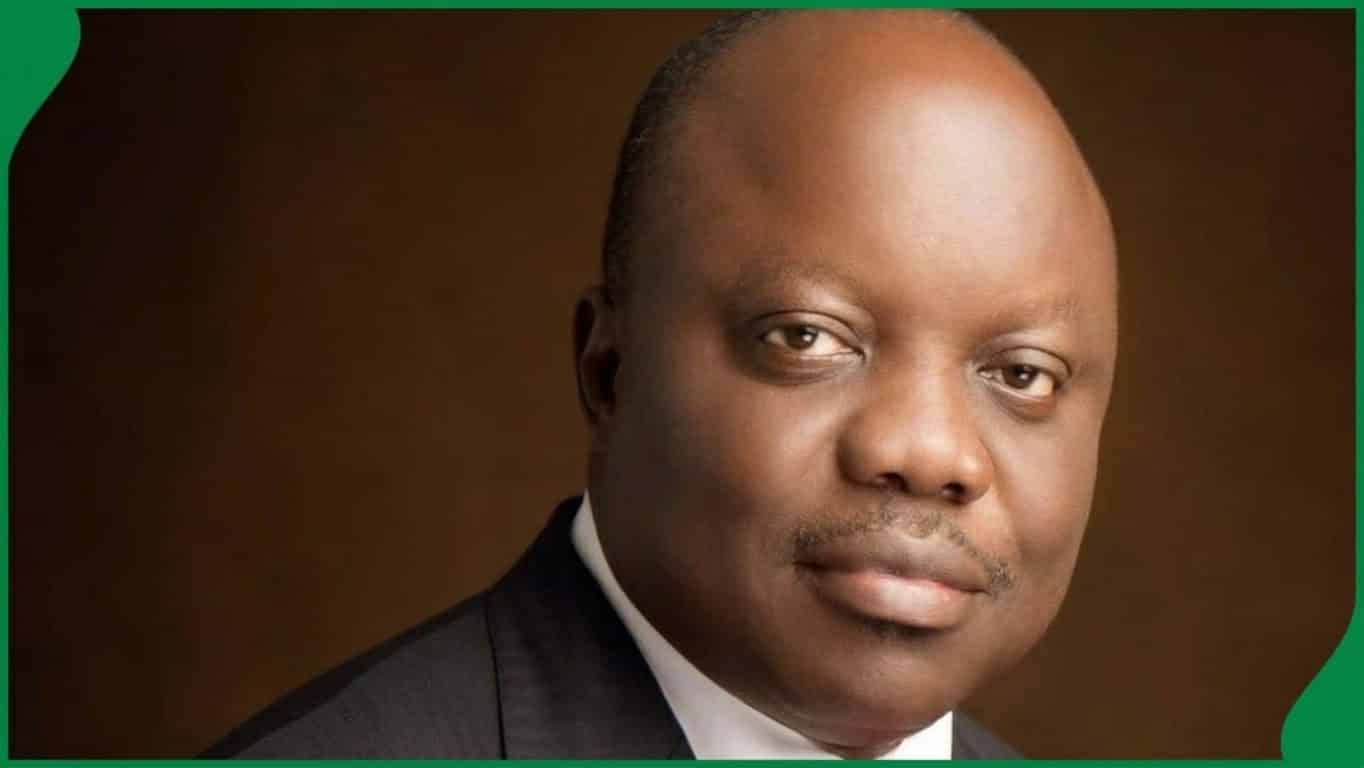
I Took Over From Myself’: Tinubu’s Claims that He and Buhari Are ‘One’

President Bola Tinubu addressed supporters on Wednesday night in a video that was equal parts pep talk and provocation, but it was one particular line that cut through everything else and set social media alight.

Speaking to the leadership and coordinators of his Renewed Hope Ambassadors, Tinubu pushed back against the criticism that his administration inherited and worsened an already broken economy.

His defence took an unexpected turn. “This economy, I didn’t have to look back because the truth is, I took over from myself,” he said. “The late Buhari is me, he was a partner, if I took over from him, is that not from myself? So, it’s wrong? Fine. Live with it, correct it, move on.

Nigerians online did not move on, at least not immediately. The comment, which appeared to collapse the distinction between his administration and Muhammadu Buhari’s, drew a flood of reactions ranging from genuine bewilderment to sharp mockery.

For critics who have spent two years arguing that Tinubu’s government is a continuation of the same policies that drove Nigeria into economic hardship, the president had essentially handed them their argument in his own words.

The broader address, shared to his official page at 10:38 pm alongside a roughly ten-minute video, was deliberately combative.

Tinubu took aim at the opposition, dismissing the recently held ADC convention as “a street convention” and its energy as mere “rascality.”

He warned that his government would not yield to noise or disobedience of court orders, while also promising supporters that standing with him would not be a decision they would regret.

At one point, he told the ambassadors, “That is why we have told you to renew their hope”, drawing laughter from the audience. He added that for those unwilling to embrace the hope on offer, they would simply provide “eyeglasses.” It was the kind of line that plays well in a room full of loyalists and poorly everywhere else.

The overall message he tried to convey was that he would not be retreating, would not be apologising, and was not particularly interested in critics.

Click to comment

Leave a Reply

Your email address will not be published. Required fields are marked *

Celebs

One Half Of The Estranged Duo P-Square Declares Nov 30 as his new birthday

Mr P has officially moved his birthday celebration from November 18 to November 30, adding a new layer to the ongoing P-Square family feud. What began as a social media declaration has now been formalised. A few hours after announcing his intention to change his birthday date, Peter Okoye, known professionally as Mr P, has issued an open letter confirming that November 18, the date he has shared with his twin brother Paul Okoye since birth in 1981, is no longer his day of celebration.

“Dear Family, Friends, and Fans,” the post read. “I’m making it official. November 18th is no longer my birthday celebration date. Please note that I will not be accepting any messages or gifts on that day. My birthday will now be celebrated on November 30th. This is a personal decision, and I truly appreciate your understanding.”

The message is brief, but its implications are quite clear. November 18 has long been one of the last remaining public symbols of a shared identity between two brothers whose professional and personal relationship has deteriorated sharply over the past several years.

By formally reassigning the date, Peter is drawing a line that goes beyond creative differences or business disputes.

The reaction from Nigerians online has been largely sceptical.

Many have questioned the necessity of the gesture, with a significant number describing it as petty and unnecessary given the more substantive issues that have defined the brothers’ current estrangement.

The consensus among critics is that changing a birthday date does little to resolve any of the actual grievances and serves mainly as a public statement of severance.

The feud between Peter and Paul Okoye has now spanned multiple years, two official splits, a brief reunion, and a growing list of public accusations on both sides. November 30 is still months away. To see if the gesture will land as true liberation or just pettiness may depend entirely on where things stand by then.

Continue Reading

News

S.A Opposition leader Julius Malema sentenced to five years in prison over gun incident

A South African court has sentenced opposition leader Julius Malema to five years in prison after finding him guilty of illegally firing a rifle during a political rally, a ruling that could shake the country’s opposition politics.

Malema, leader of the Economic Freedom Fighters (EFF), was convicted on several firearm-related charges linked to a 2018 party rally in Mdantsane in the Eastern Cape, where he was filmed firing a semi-automatic rifle into the air in front of thousands of supporters.

The court found him guilty of unlawful possession of a firearm and ammunition, discharging a firearm in a built-up area, and reckless endangerment, offences that prosecutors argued posed a serious public safety risk.

During sentencing, the magistrate emphasised that public figures must respect the law and warned that celebratory gunfire could endanger lives. Prosecutors had pushed for a maximum 15-year sentence, arguing that leniency would set a dangerous precedent given Malema’s influence as a national political figure.

Malema’s legal team, however, argued that the act was symbolic and caused no harm, urging the court to impose a fine instead of prison time.

The outspoken politician has already vowed to appeal both the conviction and the sentence, insisting the case is politically motivated. If the sentence is upheld, the ruling could have major political consequences. Under South African law, a prison sentence exceeding 12 months without the option of a fine can disqualify a lawmaker from holding a parliamentary seat, potentially forcing Malema out of the National Assembly.

Malema, a former youth leader of the African National Congress before founding the EFF in 2013, has built a reputation as one of South Africa’s most controversial political figures. His party campaigns for radical economic reforms, including land redistribution without compensation and nationalisation of key industries.

Continue Reading

Entertainment

Kanayo O. Kanayo demands lifetime streaming royalties for Nollywood stars

Veteran Nollywood actor Kanayo O. Kanayo has stirred up a conversation the industry has been quietly avoiding for years. The award-winning actor and lawyer recently proposed that the Actors Guild of Nigeria (AGN) implement a policy mandating lifetime royalty payments for all Nigerian actors and actresses featured in films uploaded to streaming platforms.

He also called for a dedicated agency to oversee and enforce compliance nationwide, arguing it would ensure performers earn from their craft long after the cameras stop rolling. The timing of the proposal is telling. Stories of financial ruin among once-beloved Nigerian actors have become alarmingly common.

Last month, veteran actor Abiodun Ayoyinka, widely known as Papa Ajasco, spoke openly about his financial struggles despite decades in the industry.

Two years prior, Hanks Anuku made headlines with public pleas for financial assistance after falling on hard times post-Nollywood.

Patience Ozokwor recently put it bluntly: “The reason why Nollywood actors and actresses are poor is that we don’t get royalties for what we do, we only get paid for our appearance at the shoot.” Her words, along with the others, show a consistent pattern of demand.

The proposal has drawn mixed reactions from industry figures. Writer-director Jadesola Osiberu responded with sarcasm, suggesting that if actors want royalties, perhaps they should also contribute to covering a producer’s losses proportional to their screen time, a dig at the one-sided nature of the demand.

Producer and actress Bolaji Ogunmola was more direct: if actors want backend earnings, they should negotiate equity stakes and invest in projects upfront rather than seek guaranteed payouts after the fact.

It’s a fair challenge. The music industry comparison many have reached for doesn’t quite hold up here.

In more structured film industries, residuals are tied to carefully negotiated distribution contracts and enforced by unions, organisations built over decades with legal infrastructure and industry-wide buy-in.

Continue Reading

Trending