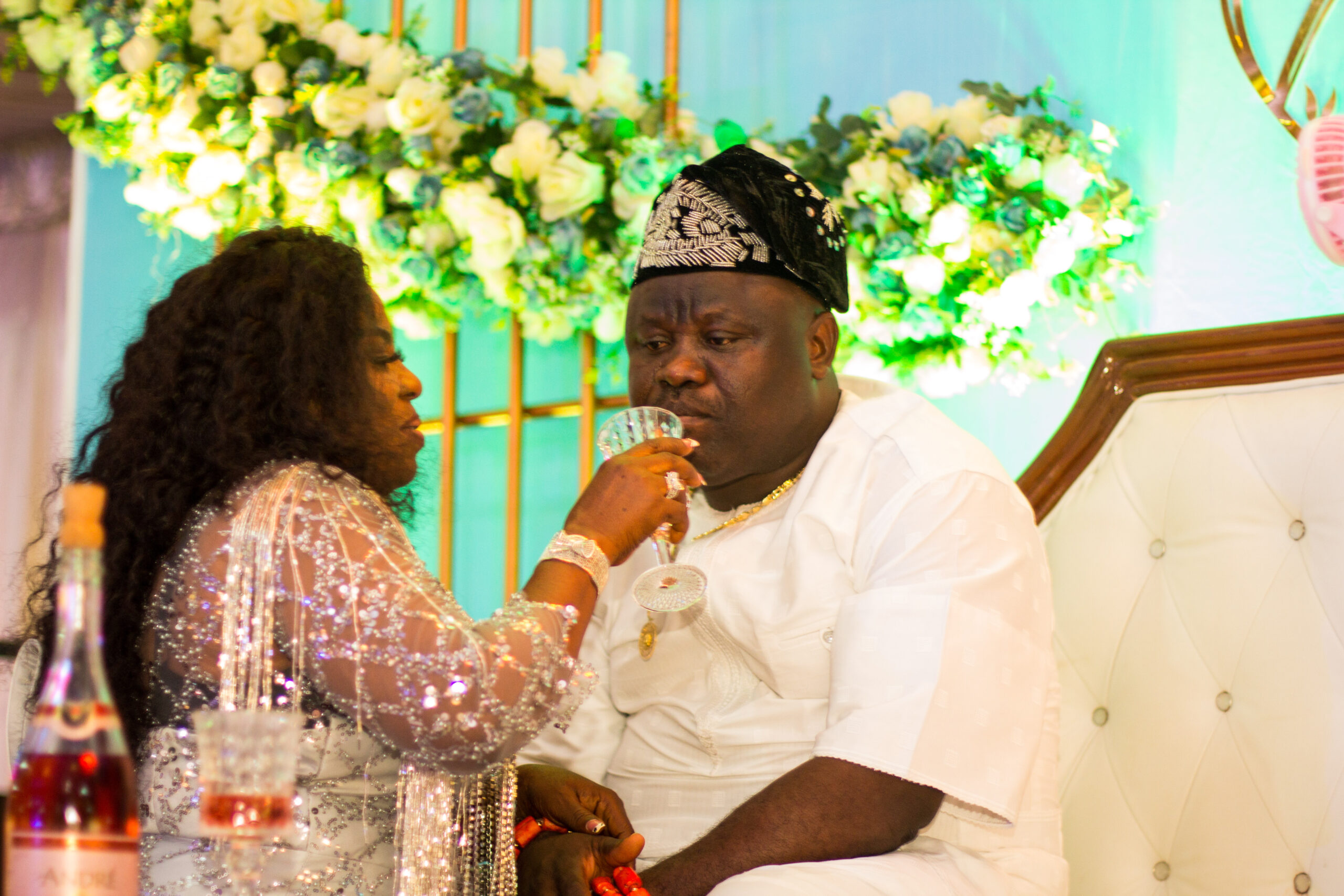
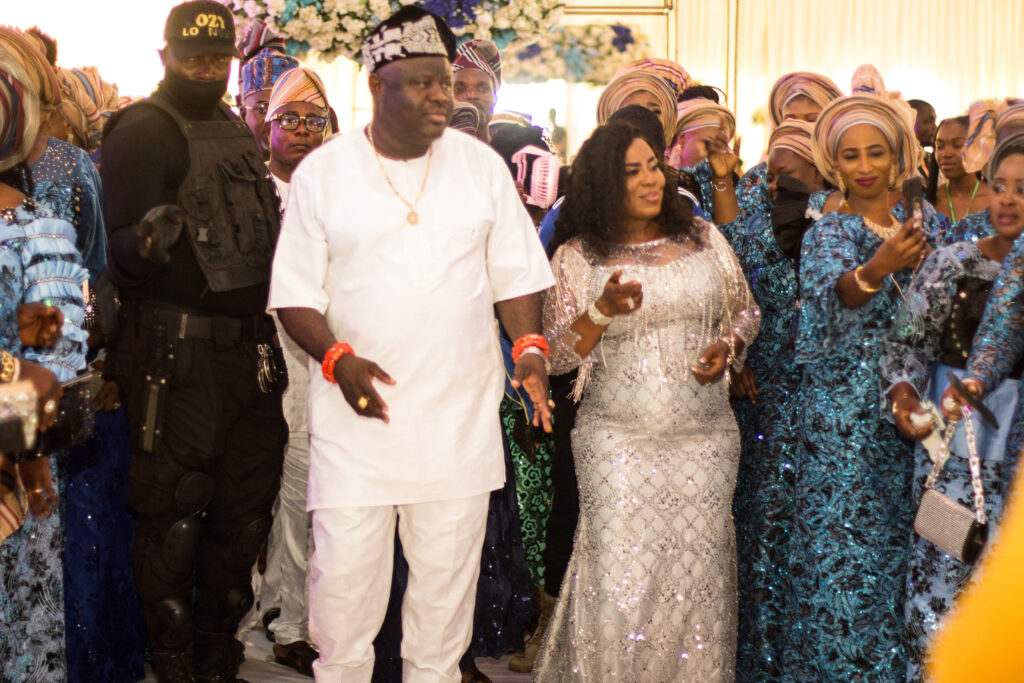
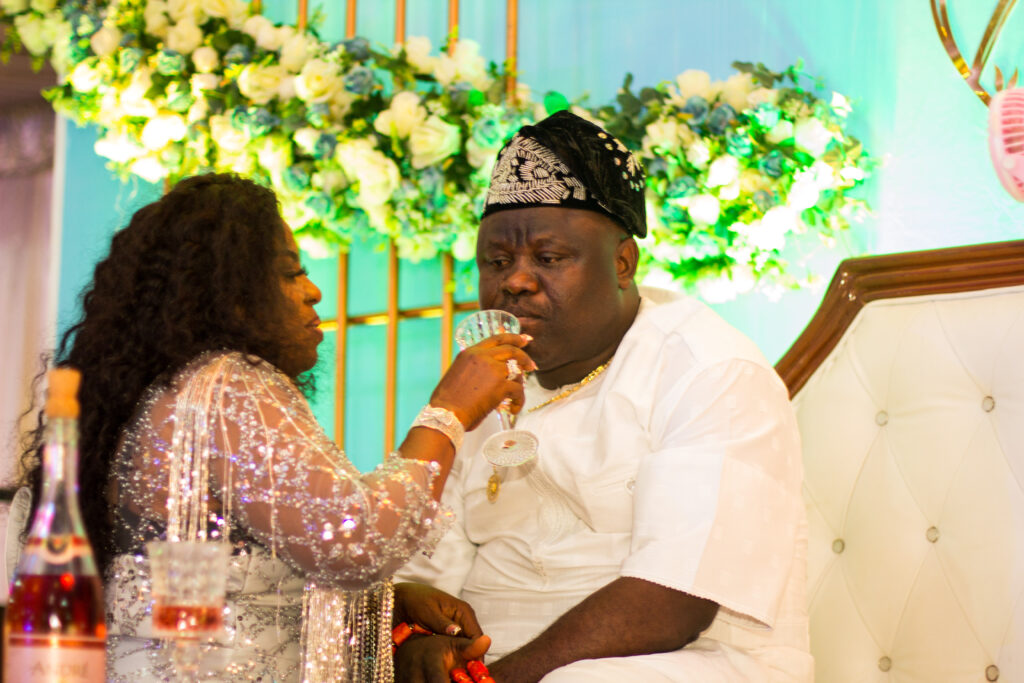
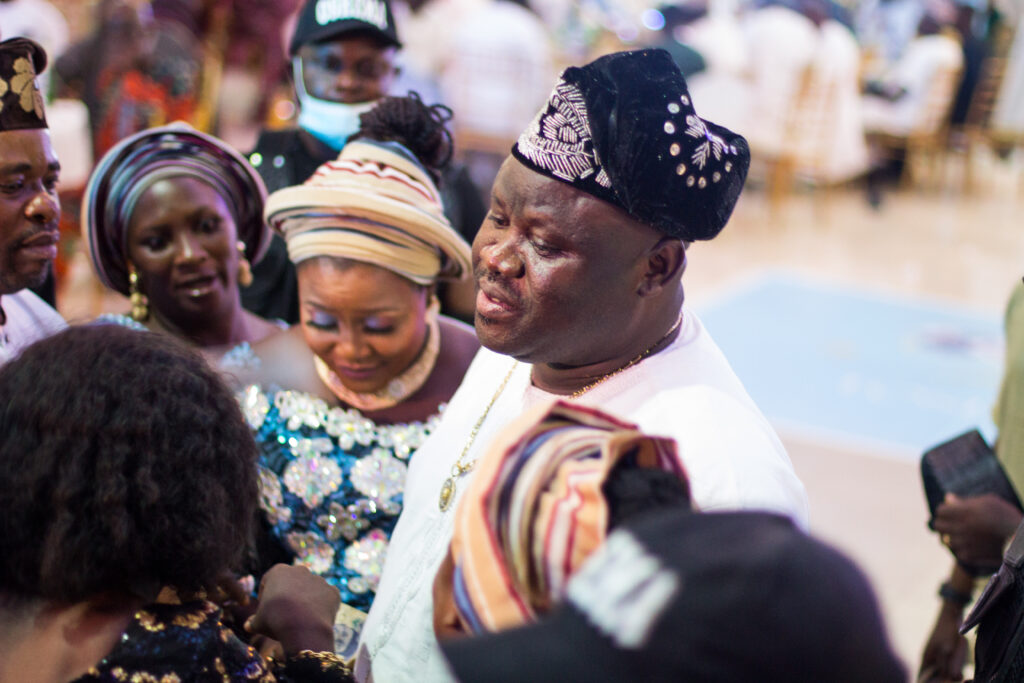
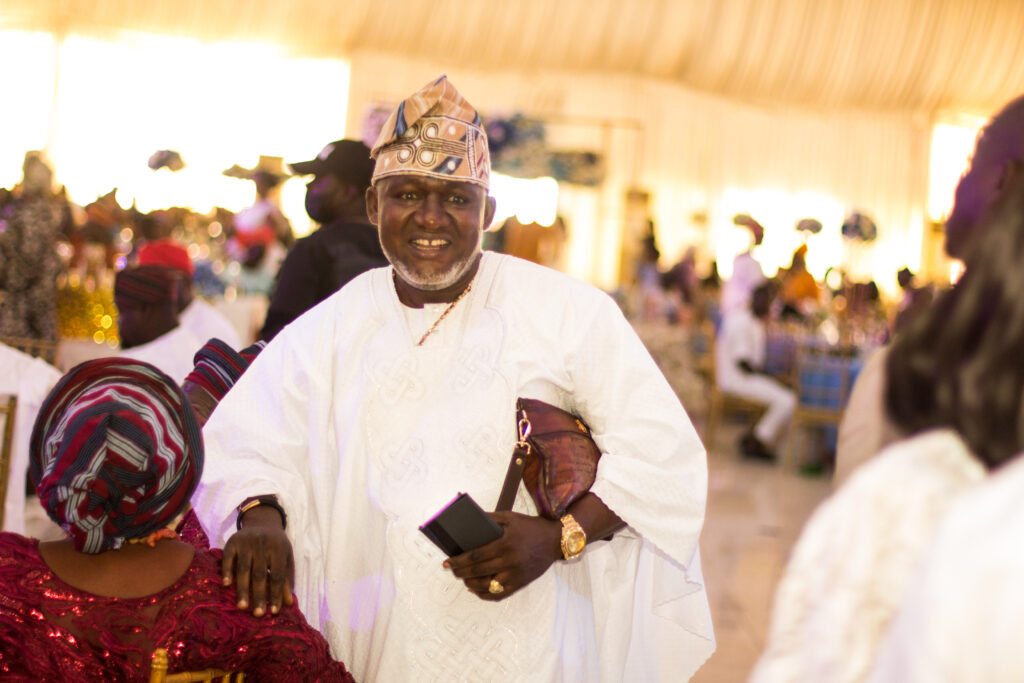
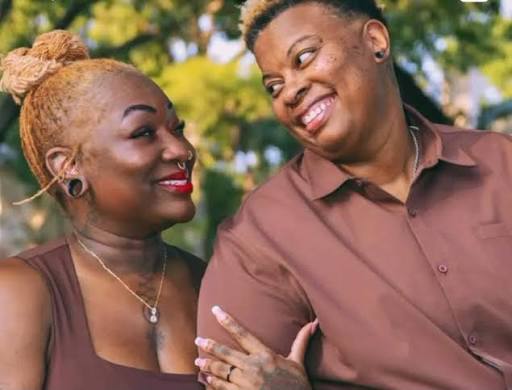
Joyful was the moment when the families of Oso in Ado-Ekiti and Ojo in Akure, Ondo State, as their children, Chief Sunday Oso and Mrs. Oluwatosin Ojo, formally sealed their lifelong union with an exchange of marital vows on November 6, 2021.
For the two lovebirds, the aura exuded nothing but love, as they both looked resplendent in their beautiful attire, gazing at each other with overwhelming excitement.
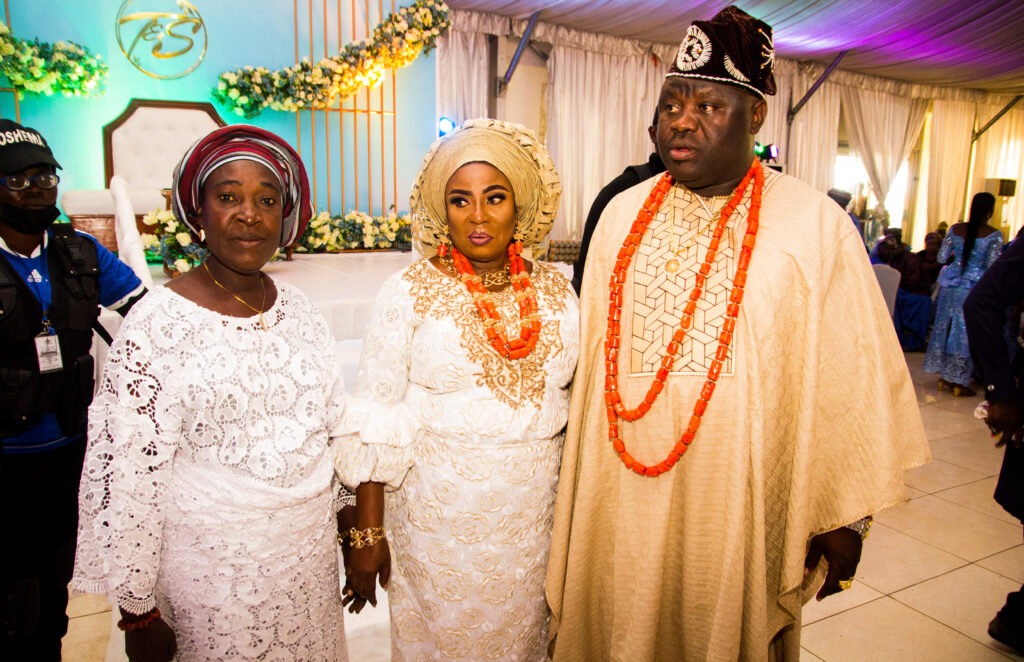
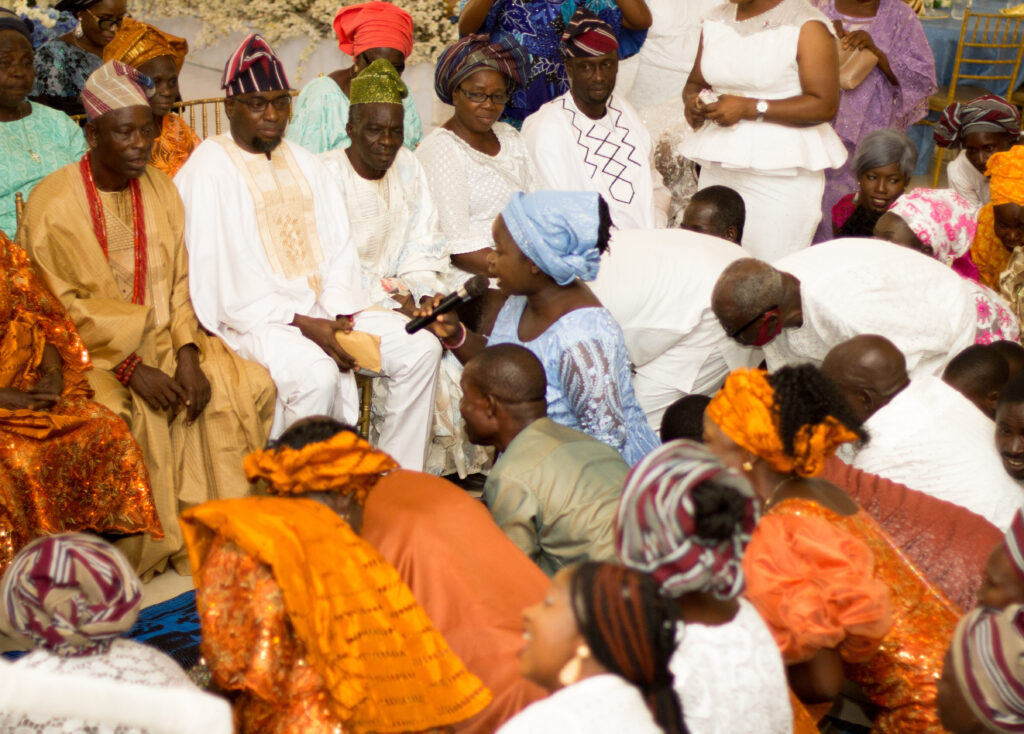
The event kicked off with a photo session by the couple at St. Jacobs Hotel, a 5-star hotel in Akure, Ondo State, which hosted notable guests from across Nigeria and abroad. At the same time, families, friends, and well-wishers converged at BAS Event Centre, Akure, Ondo State, the venue for both the traditional marriage and reception.
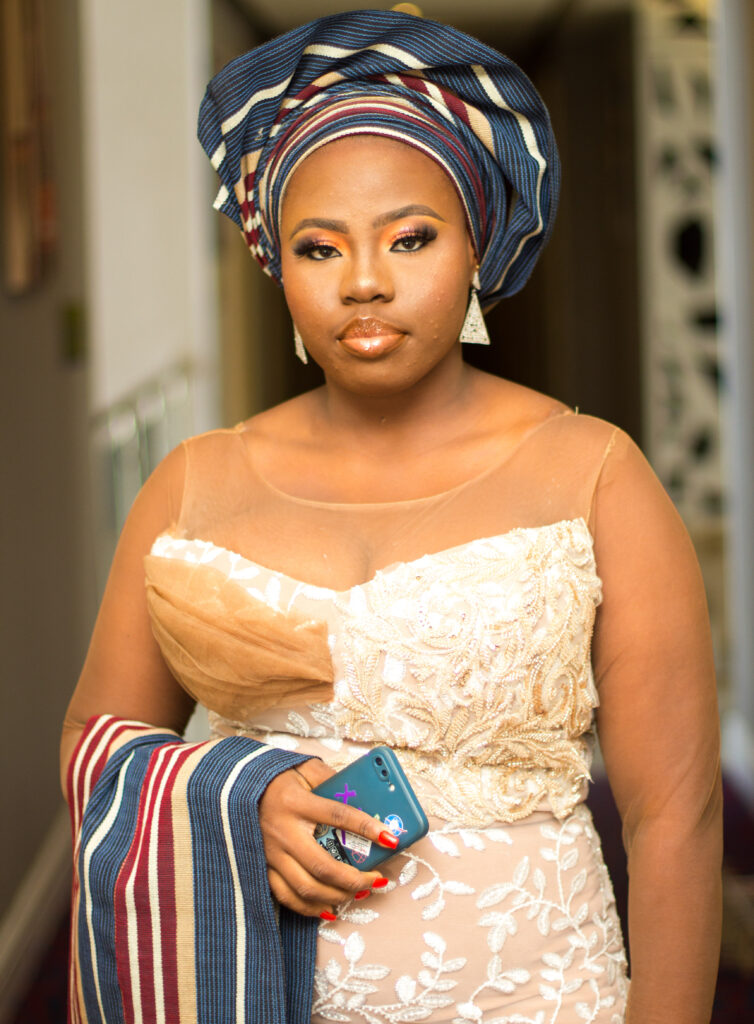
The two families expressed their joy as they warmly welcomed one another during the engagement. Guests were enlivened with rib-cracking jokes by the popular actress, Ronke Ojo, popularly known as Oshodi Oke, who anchored the event. The Ogbomoso-based Fuji maestro, Ramoni Akanni, did not fail to entertain guests with lively music. It was an all-you-can-eat menu accompanied by varieties of drinks, wine, and liquor.
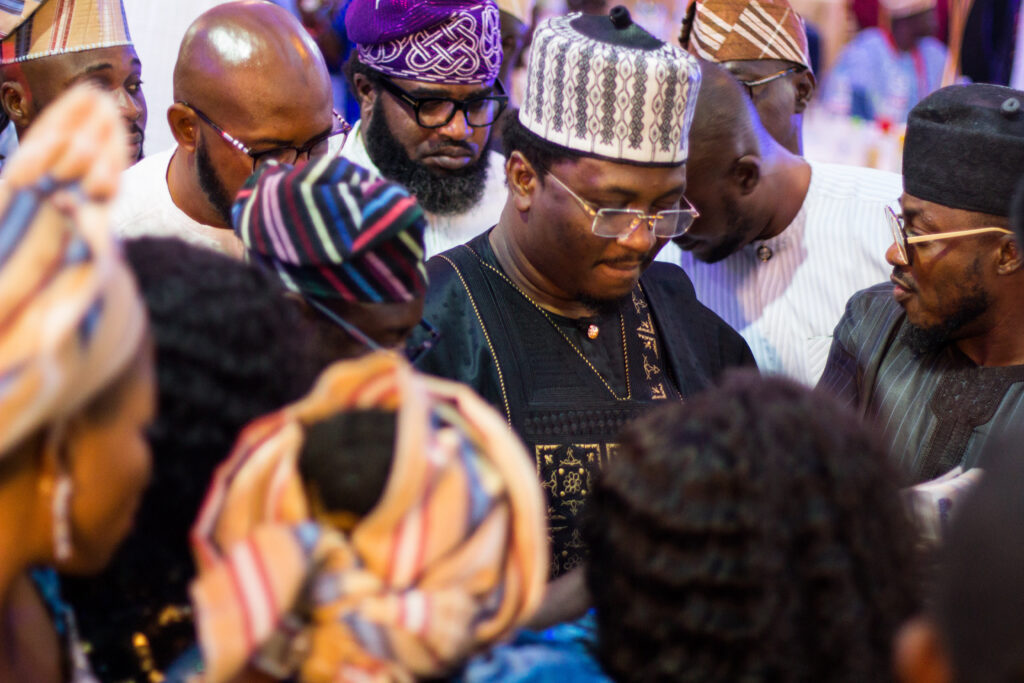
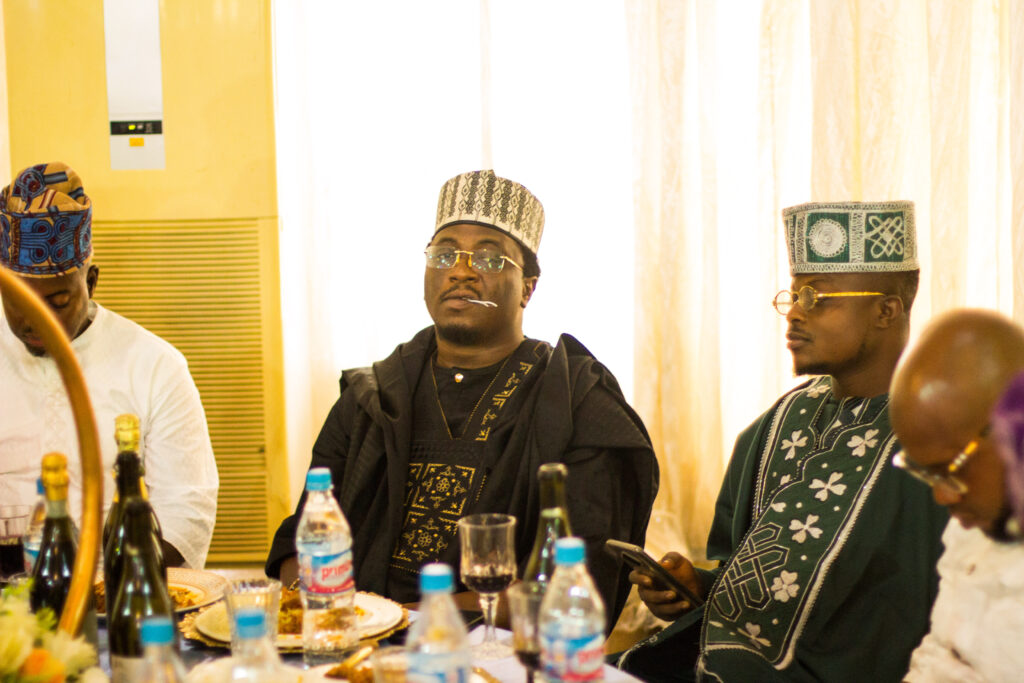
Dignitaries in attendance include top politician, Hon. Olu Araoyinbo, Chairman, West Park Hotel, Mr Rasaq Oseni, Aare Khalif Adebiyi, Nigerian-based businessman, Mr Sesan Adelabu, Emirates, Chairman, St. Jacobs Hotel, Mr Babatope Adebiyi (Jafil), the Waziri of Ekiti State, Alhaji Ajijola, former Chairman, Ado-Ekiti Local Government, Hon. Chief (Mrs) Tosin Aluko, among others.
Kanayo O. Kanayo demands lifetime streaming royalties for Nollywood stars
Veteran Nollywood actor Kanayo O. Kanayo has stirred up a conversation the industry has been quietly avoiding for years. The award-winning actor and lawyer recently proposed that the Actors Guild of Nigeria (AGN) implement a policy mandating lifetime royalty payments for all Nigerian actors and actresses featured in films uploaded to streaming platforms.
He also called for a dedicated agency to oversee and enforce compliance nationwide, arguing it would ensure performers earn from their craft long after the cameras stop rolling. The timing of the proposal is telling. Stories of financial ruin among once-beloved Nigerian actors have become alarmingly common.
Last month, veteran actor Abiodun Ayoyinka, widely known as Papa Ajasco, spoke openly about his financial struggles despite decades in the industry.
Two years prior, Hanks Anuku made headlines with public pleas for financial assistance after falling on hard times post-Nollywood.
Patience Ozokwor recently put it bluntly: “The reason why Nollywood actors and actresses are poor is that we don’t get royalties for what we do, we only get paid for our appearance at the shoot.” Her words, along with the others, show a consistent pattern of demand.
The proposal has drawn mixed reactions from industry figures. Writer-director Jadesola Osiberu responded with sarcasm, suggesting that if actors want royalties, perhaps they should also contribute to covering a producer’s losses proportional to their screen time, a dig at the one-sided nature of the demand.
Producer and actress Bolaji Ogunmola was more direct: if actors want backend earnings, they should negotiate equity stakes and invest in projects upfront rather than seek guaranteed payouts after the fact.
It’s a fair challenge. The music industry comparison many have reached for doesn’t quite hold up here.
In more structured film industries, residuals are tied to carefully negotiated distribution contracts and enforced by unions, organisations built over decades with legal infrastructure and industry-wide buy-in.
Hours after DJ Tunez publicly addressed the alleged altercation involving Burna Boy’s camp, Wizkid took to X with a series of posts that appear to directly mock Burna Boy over the incident.
Videos circulating on social media appear to show DJ Tunez, the Nigerian-American DJ, being physically attacked by individuals allegedly linked to Burna Boy’s camp. The incident, believed to have taken place at a private gathering at Obi Cubana’s residence, has sent fans of both artists into a frenzy online.
According to a source in Burna Boy’s camp, the confrontation ensued after DJ Tunez, who played at the event, accompanied the legendary Afrobeats superstar D’banj to Burna Boy’s section of the VIP lounge. The source said an argument followed between the Grammy-winning megastar and DJ Tunez, which then led to a scuffle before Burna Boy was quickly dragged away from the scene by his security.
In one tweet, he wrote: “Pussy nigga jump a DJ with 10 man carry Diddy towel dey dance. I never see fool like this diddy babe for my life,” a line that quickly began circulating across social media.
The post references the claims that multiple people were involved in the confrontation with Tunez, while also dragging in the ongoing online jokes linking Burna Boy to embattled American music executive Diddy.
Wizkid doubled down shortly after, posting an image of Johnson’s baby oil, a not-so-subtle callback to the same “baby oil” angle that has trailed Burna Boy in recent days, particularly following comments made by Speed Darlington that have since taken on a life of their own online.
The timing is also quite interesting. Wizkid’s posts come just as the situation between DJ Tunez and Burna Boy continues to escalate, with the Nigerian DJ Association already announcing a temporary nationwide ban on Burna Boy’s music pending further investigation.
Burna Boy himself has yet to issue a formal statement on the incident. What this does, however, is shift the tone. Until now, the situation has been judged to be somewhere between a personal dispute and an industry issue.
Wizkid’s involvement firmly pulls it back into the long-running, often tense rivalry between the camps, one that has historically played out through music, subtext, and the occasional online shade.
Kunle Remi Blasts Government on economic hardship, asks Nigerians to hold government accountable
Nollywood actor Kunle Remi has joined growing public frustration over the rising cost of petrol, using his platform to call for more open conversations about the country’s current economic strain
The actor pushed back against the idea that public figures should stay silent on political or economic issues. “Usually I say things like I don’t really get involved with politics… No, that’s the most stupid statement from anyone in Nigeria right now,” he said. “We should be discussing, we should be talking about it, we should be trying to fix… There’s nothing like sitting on the fence.”
Remi linked his concerns to the direct impact of fuel prices on everyday life, pointing to the ripple effect across businesses and households. “Today I bought petrol for 1,300-something naira,” he said, noting that everything from shopping malls to small barber shops depends heavily on petrol to operate. “I have a child, so I’m thinking not just for myself.”
He also questioned Nigeria’s sensitivity to global oil market shifts, particularly ongoing tensions in the Middle East. “I don’t understand why Nigeria is one of the first countries to be affected by the war in Iran. My spirit is very angry. All the things I’ve been working for is for what?” he said.
His comments come amid sustained pressure on petrol prices across Nigeria. Despite the start of domestic refining operations, including the Dangote Refinery, pump prices have continued to reflect global market volatility. Industry stakeholders have pointed to international crude oil price movements and geopolitical tensions as key factors limiting any immediate relief.
Recent market data shows that a nearly 20 per cent increase in petrol prices implemented last week remains in place, with a national average of about N1,300 per litre. A decline in crude oil prices earlier in the week has yet to translate into lower pump prices, raising further concerns among consumers.
Online, Remi’s remarks have drawn widespread support, with many users commending him for speaking out on an issue that directly affects daily living. Some described his comments as reflective of broader public sentiment, especially as more Nigerians grapple with rising transportation and operating costs.
Recent Comments